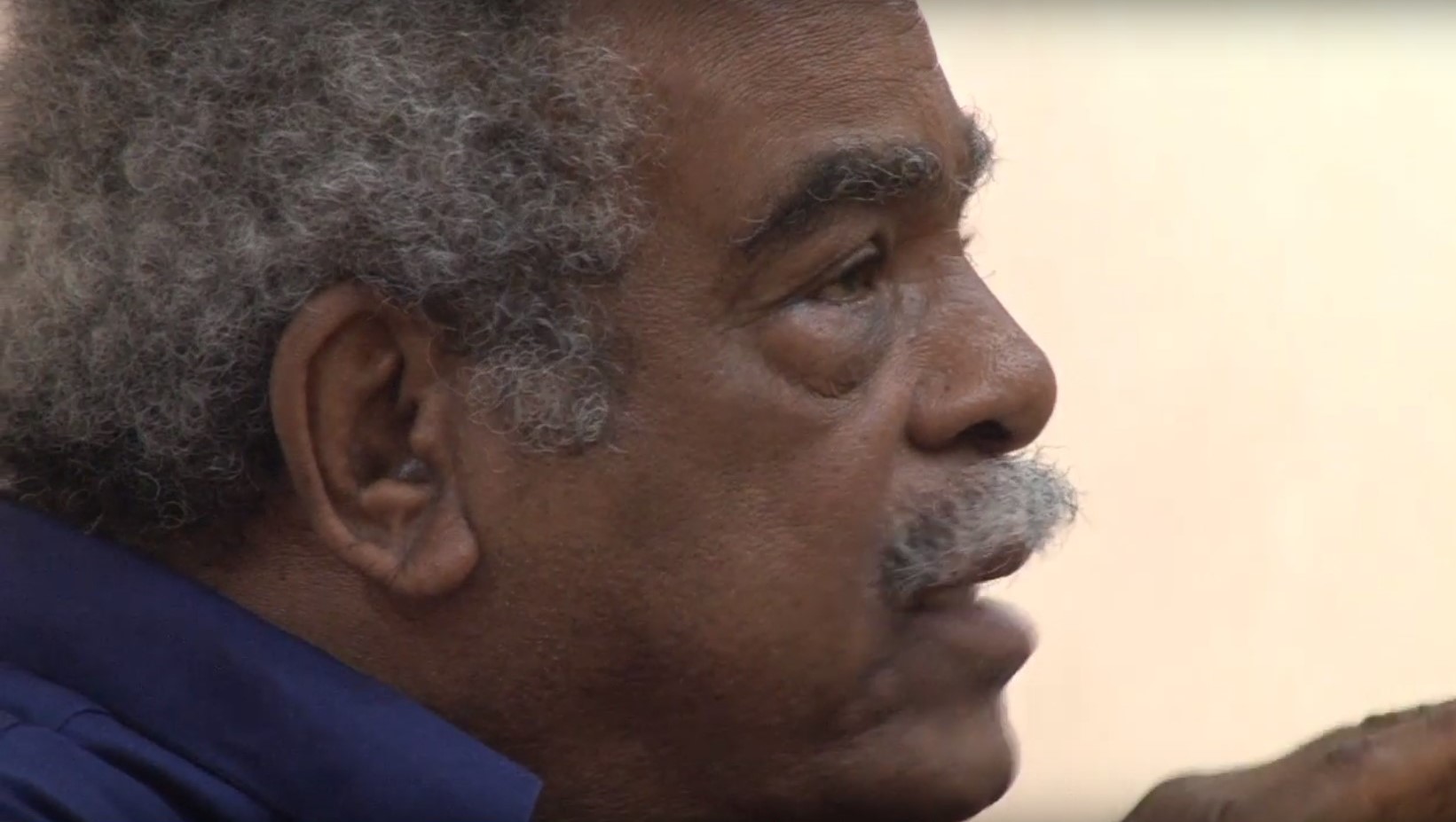
René Ménil

René Ménil
Biography
Introduction
René Ménil (October 26, 1907 – October 28, 2004) stands as one of the most formidable intellectual forces of the 20th-century Caribbean. A philosopher, essayist, poet, and political militant, Ménil was a foundational figure in the Négritude movement and a relentless critic of French colonialism. Alongside Aimé Césaire and Suzanne Césaire, he co-founded the legendary journal Tropiques, which radically transformed the cultural and political landscape of Martinique during the oppressive years of the Vichy regime. While often remembered alongside his more internationally famous contemporaries, Ménil’s deeply Marxist, materialist approach to Caribbean aesthetics and identity provided the critical anchor that prevented Négritude from drifting into mere racial essentialism.
Early Life and the Paris Years
Ménil was born in the rural commune of Gros-Morne, Martinique, but he spent his formative years in Fort-de-France. Between 1920 and 1927, he was a student at the prestigious Lycée Schœlcher, an institution that would become deeply intertwined with his life's work. Excelling in his studies, Ménil traveled to Paris in the late 1920s to pursue a degree in philosophy.
In Paris, the young Martinican intellectual found himself immersed in a vibrant, turbulent metropolis where anti-colonial activists, Black artists from the Harlem Renaissance, and radical French thinkers converged. It was here that Ménil encountered Surrealism, a movement spearheaded by André Breton that sought to liberate the human mind from the constraints of bourgeois rationality. For Ménil and his Afro-Caribbean peers, Surrealism was not merely an aesthetic experiment; it was a political weapon. It offered a vocabulary to dismantle the psychological alienation imposed by centuries of colonial assimilation.
"We are suffocating in this capitalist, Christian, bourgeois world. We reject it with all our strength, and we are armed with the poetry of revolt."
In 1932, Ménil, along with Étienne Léro, Jules-Marcel Monnerot, and others, co-founded the radical journal Légitime Défense. Though it only published a single issue, the journal is widely considered the first explicit anti-colonial manifesto by French West Indian students. It attacked the conservative Martinican bourgeoisie for blindly mimicking French culture and declared an urgent need for an authentic, proletarian-aligned Black consciousness. This explosion of radical thought laid the intellectual bedrock for what would soon become the Négritude movement.
The Foundation of Tropiques and the Vichy Era
Returning to Martinique in the late 1930s, Ménil took up a position as a philosophy professor at his alma mater, the Lycée Schœlcher. By 1940, the geopolitical situation had devolved into catastrophe. France fell to Nazi Germany, and Martinique came under the control of the collaborationist Vichy government, administered locally by the authoritarian Admiral Georges Robert. The island was blockaded, food became scarce, and a heavy-handed regime of racist censorship and cultural suffocation was enforced.
It was within this suffocating atmosphere that Ménil collaborated with his colleague Aimé Césaire and Césaire's brilliant wife, Suzanne Césaire, to launch the cultural journal Tropiques in 1941. Operating under the watchful eye of Vichy censors, the founders employed surrealist poetics as a sophisticated form of camouflage. To the censors, the essays and poems appeared to be harmless, esoteric musings on local flora, fauna, and folklore. In reality, Tropiques was a powerful vehicle for cultural resistance, urging Martinicans to reject French assimilation and reconnect with their suppressed African heritage.
Ménil’s contributions to Tropiques were characterized by a rigorous philosophical inquiry into the nature of the "Antillean condition." He argued that the true tragedy of the colonized was not just political subjugation, but the colonization of the mind. By dissecting the psychological alienation of the Martinican people, Ménil helped articulate the core tenets of Négritude.
However, the Vichy authorities eventually saw through the journal's surrealist veil. In 1943, the chief censor banned Tropiques, denouncing its creators as "racists, sectarians, and revolutionaries." Ménil, alongside the Césaires, responded with a defiant letter that cemented their legacy as uncompromising intellectuals, proudly accepting the censor's accusations as a badge of honor.
A Marxist Critique of Négritude
Following the end of World War II, Ménil's political and philosophical trajectory diverged from some of his peers. While Négritude had successfully awakened Black consciousness, Ménil grew increasingly wary of the movement's tendency to idealize a mystical, essentialist "African soul." Deeply committed to Marxist dialectics, Ménil believed that identity was not a static biological or spiritual inheritance, but a dynamic product of historical, economic, and social forces.
He argued that the Antillean identity was forged in the crucible of plantation slavery, capitalism, and colonial violence. To liberate themselves, Martinicans needed more than poetry and nostalgia; they needed a concrete political struggle against economic exploitation. This materialist perspective led Ménil to become a driving force in left-wing politics. In 1957, he was a key figure in the creation of the Parti Communiste Martiniquais (PCM). For decades, he was a tireless political journalist, writing for the communist organ Justice and directing the journal Action.
"The alienation of the colonized is not merely an abstraction; it is written in the sugarcane fields, in the economy of dependence, and in the very language we are forced to speak. Liberation requires dismantling the base as well as the superstructure."
Teaching and Later Works
Beyond his writing and political activism, Ménil was a profoundly influential educator. For generations, he taught philosophy at the Lycée Schœlcher, shaping the minds of thousands of Martinican youth. His classroom was a space of rigorous intellectual freedom, where students were encouraged to question authority, analyze their society, and engage with global philosophical currents.
In his later years, Ménil finally collected his life's work into two monumental volumes. Tracées: Identité, négritude, esthétique aux Antilles (1981) gathered his most important critical essays from the 1930s through the 1970s. The book serves as a vital record of the evolution of Caribbean thought, offering brilliant critiques of literature, aesthetics, and political economy.
Nearly two decades later, at the age of 92, Ménil published Antilles déjà jadis (1999). This profound reflection on his life, his island, and the long struggle for emancipation was met with widespread acclaim and was awarded the prestigious Prix Frantz Fanon. The book reaffirmed Ménil’s status not merely as a relic of the past, but as a continuously relevant thinker whose insights into neo-colonialism remained as sharp as ever.
Death and Legacy
René Ménil passed away on October 28, 2004, at the age of 97, in Sainte-Luce, Martinique. As one of the last living founders of the Négritude movement and the Tropiques circle, his death marked the end of an extraordinary era of Caribbean intellectual history.
Today, Ménil is remembered as the indispensable philosophical anchor of Martinican radicalism. While poets sang of liberation, Ménil provided the rigorous analytical framework necessary to achieve it. In recognition of his massive contribution to the island’s intellectual heritage, the municipality of Fort-de-France named the traffic circle in front of his beloved Lycée Schœlcher the "Giratoire René Ménil." His works, particularly Tracées and Antilles déjà jadis, remain essential reading for anyone seeking to understand the complex interplay of race, class, and identity in the French West Indies.
References
Major Contributions
- René Ménil was a monumental figure in Caribbean intellectual history, providing the essential philosophical and materialist critique that shaped the Négritude movement.
- By co-founding *Légitime Défense* (1932) and the profoundly influential journal *Tropiques* (1941–1945) with [Aimé Césaire](/profiles/aime-cesaire) and Suzanne Césaire, Ménil helped carve out a space for anti-colonial resistance and Martinican cultural affirmation during the oppressive Vichy regime.
- His brilliant use of Surrealism as a tool against colonial alienation empowered a generation to reject French assimilationist policies and embrace their Afro-Caribbean identity.
- Beyond his literary and cultural achievements, Ménil made lasting contributions to the political and educational development of [Martinique](/islands/martinique).
- As a founder of the Martinican Communist Party (PCM) and a long-time philosophy professor at the Lycée Schœlcher, he educated and radicalized generations of students, insisting that true liberation required dismantling economic exploitation alongside psychological emancipation.
- His major theoretical works, particularly *Tracées* (1981) and *Antilles déjà jadis* (1999), remain foundational texts for understanding the complex intersections of Marxist dialectics, aesthetics, and Antillean identity.