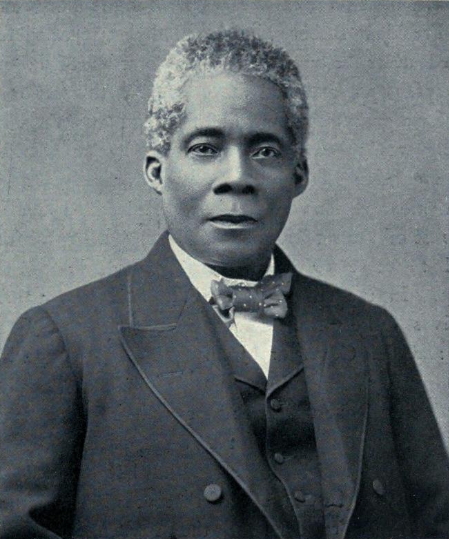
Rothschild Francis
Biographical Details
Rothschild Francis
Biography
Rothschild Francis: The Unyielding Voice of the Virgin Islands
Rothschild "Polly" Francis (1891–1963) stands as a towering, transformative figure in the history of the United States Virgin Islands. A pioneering labor leader, self-educated intellectual, fierce civil rights activist, and fearless journalist, Francis defined the early struggle for democracy and civil liberties in the territory following its transfer from Danish to American sovereignty in 1917. At a time when the local population faced significant economic hardship, systemic disenfranchisement, and strict military rule, Francis emerged as a relentless advocate for the marginalized and oppressed. He is best remembered for founding the influential newspaper The Emancipator, fiercely campaigning for a civilian government to replace the U.S. Naval administration, and demanding full United States citizenship for all Virgin Islanders. Through his unyielding dedication to democratic ideals, he fundamentally altered the political landscape of the Caribbean.
Early Life in the Danish West Indies
Rothschild Francis was born in 1891 on the island of St. Thomas, which was then a crucial part of the Danish West Indies. Growing up during the final decades of Danish colonial rule, Francis witnessed firsthand the vast inequalities that defined Caribbean society of the era. The local economy, which had historically been driven by the brutal realities of the trans-Atlantic slave trade, sugar cultivation, and maritime commerce, had long been in a state of severe decline. The majority of the Afro-Caribbean population suffered under systemic poverty, agonizingly low wages, and severely limited educational opportunities. Social mobility was virtually non-existent for those outside the privileged colonial elite.
Despite the lack of formal educational structures for the working class, Francis was a man of immense intellectual curiosity. Primarily self-educated, he possessed a voracious appetite for knowledge, studying history, law, and political philosophy. This self-directed education cultivated within him an acute sense of justice and a deep understanding of the mechanics of oppression—insights that would guide his lifelong crusade for equality.
In 1917, amidst the geopolitical anxieties of World War I, the United States purchased the islands from Denmark for $25 million, renaming them the United States Virgin Islands. For many local residents, the transfer of sovereignty brought a profound wave of optimism. They firmly believed that becoming part of the United States—a nation fundamentally founded on principles of liberty and justice—would usher in an era of democratic ideals, economic prosperity, and the immediate granting of American citizenship.
However, the reality of the transfer fell drastically short of these lofty expectations. Rather than integrating the islands as a democratic territory, the U.S. government placed them under the jurisdiction of the Department of the Navy. Rather than experiencing the promises of democracy, Virgin Islanders found themselves subjected to strict, autocratic military rule. They were governed by naval officers who possessed virtually unchecked executive, legislative, and judicial powers. The local population remained devoid of constitutional protections, political self-determination, and the U.S. citizenship they so deeply coveted. It was within this crucible of profound disappointment and paternalistic colonial administration that Rothschild Francis forged his powerful political ideology.
"The transfer of the Virgin Islands did not bring the freedom and democracy promised by the American flag; instead, it brought military rule. We demanded nothing less than our birthright as citizens—a fight that could not be silenced by the gavel of a naval judge."
The Emancipator and the Power of the Press
Recognizing that the people desperately needed a platform to voice their grievances and organize their resistance, Francis turned to the power of journalism. In 1921, he founded a newspaper aptly named The Emancipator. Through its pages, Francis launched a sustained, courageous, and highly effective campaign against the abuses and systemic failures of the naval administration. The Emancipator was not merely a newspaper; it served as the intellectual, social, and political heart of the Virgin Islands' early civil rights movement.
Francis used the publication to ruthlessly expose government corruption, criticize the heavy-handed and often arbitrary policies of naval officials, and highlight the severe economic exploitation of the working class. He consistently fought for fair wages, better working conditions, and the fundamental right of local residents to have a meaningful say in their own governance. By articulating the deepest frustrations of the common people, Francis quickly became the most visible and vocal opponent of naval rule in the territory.
His editorials were sharp, uncompromising, and deeply rooted in the democratic principles espoused by the United States Constitution—principles he argued were being hypocritically denied to the people of the Virgin Islands. He drew stark contrasts between the democratic rhetoric of the American mainland and the dictatorial reality of the islands' governance, creating a compelling moral argument that resonated both locally and abroad.
The Fight for Civilian Government and Citizenship
Francis’s activism was by no means confined to the printing press. He was fundamentally a man of action who took the fight directly to the halls of political power. As an elected member of the Colonial Council, the local legislative body at the time, he pushed tirelessly for legislative reforms and relentlessly challenged the colonial authority of the naval governors at every turn.
His political vision was clear and uncompromising: the complete removal of military rule, the establishment of a fully functional civilian government, and the extension of full United States citizenship to all Virgin Islanders. To achieve these ambitious goals, Francis realized he needed to build power from the ground up. He organized labor unions to empower the working class, leading strikes and negotiations that demanded basic dignity and a living wage for laborers who had long been exploited.
Simultaneously, Francis built strategic alliances with prominent progressive organizations on the U.S. mainland. He collaborated extensively with the American Civil Liberties Union (ACLU), utilizing their legal expertise and political connections to amplify his cause. Francis traveled to Washington, D.C., to testify directly before the United States Congress. During these landmark hearings, he passionately and eloquently articulated the plight of his people. He exposed the inherent contradictions of a purportedly democratic nation administering a colonial military regime, forcing American lawmakers to confront the realities of their territorial policies.
His tireless efforts laid the critical groundwork that would eventually lead to the granting of U.S. citizenship to Virgin Islanders in 1927 (which was later expanded in 1932), as well as the transition to a civilian government under the Department of the Interior in 1931. Although these sweeping victories took time to fully materialize, it was unequivocally Francis’s early, uncompromising agitation that set the wheels of historical change in motion.
Persecution, Legal Battles, and Resilience
Unsurprisingly, Francis’s relentless challenge to the status quo made him a prime target for the naval administration. The military governors and their appointed officials viewed him not as a legitimate civil rights leader, but as a dangerous agitator, a subversive threat to public order, and an enemy of the state. As a result, Francis faced intense political persecution and a series of exhausting legal battles designed specifically to silence him, discredit his movement, and bankrupt his newspaper.
In 1924, he was convicted of criminal libel after publishing an editorial that heavily criticized a local police officer for brutality and abuse of power. The naval-appointed judges, who operated without the standard checks and balances of a civilian justice system, were eager to penalize him. Despite aggressively appealing the decision and receiving significant legal support and representation from the ACLU, the conviction was ultimately upheld.
Just two years later, in 1926, the administration struck again. Francis was indicted and convicted on charges of embezzlement. Modern historians, legal scholars, and contemporary Virgin Islands legislators have heavily scrutinized these convictions, almost universally characterizing them as deeply suspicious, entirely politically motivated, and orchestrated specifically to crush his political influence and destroy his reputation among the masses.
These drawn-out legal battles exacted a heavy toll on Francis, both personally and financially. The relentless harassment, combined with the financial ruin brought upon The Emancipator, eventually forced him to step away from the forefront of Virgin Islands politics. He subsequently relocated to the U.S. mainland, where he lived out the remainder of his life in relative obscurity. However, his spirit remained unbroken, and the ideological seeds he had planted in the minds of Virgin Islanders continued to grow and bear fruit long after his departure.
Legacy and Modern Recognition
Rothschild Francis passed away in 1963, living just long enough to see many of his core political goals realized, though he rarely received the credit he deserved during his lifetime. Today, his legacy as a foundational figure in the Virgin Islands' quest for civil rights remains deeply ingrained in the territory's historical consciousness. He is revered not just as a labor leader or a journalist, but as a profound visionary who sacrificed his own freedom, reputation, and livelihood to secure the democratic rights of future generations.
His extraordinary contributions have been memorialized in numerous ways across the Virgin Islands, ensuring that his name will never be forgotten. The historic Market Square in Charlotte Amalie, St. Thomas—a central commercial and social gathering place for the community for centuries—was officially renamed Rothschild Francis Square in his honor. This bustling center of commerce now serves as a permanent monument to his fight for the working class.
In Educators Park on St. Thomas, a prominent bust of Francis stands proudly alongside other revered historical figures such as Edith Williams and J. Antonio Jarvis. October 5th is officially designated as Rothschild Francis Day in the territory, a day dedicated to reflecting on his immense contributions to civil liberties, journalism, and labor rights.
Furthermore, in recent years, the Virgin Islands Legislature has undertaken significant efforts to posthumously pardon Francis for his libel and embezzlement convictions, formally recognizing the unjust, corrupt, and politically motivated nature of his prosecution by the naval administration. This movement for exoneration reflects a broader, crucial reckoning with the colonial history of the territory and serves as the ultimate vindication of a man who was always on the right side of history.
Rothschild Francis’s life is a powerful testament to the enduring power of the press, the unbreakable resilience of the human spirit, and the perpetual quest for equality. He boldly dared to demand that the promises of democracy be extended across the ocean to the shores of the Virgin Islands, and in doing so, he forever altered the political and social trajectory of his homeland.
Major Contributions
- Rothschild Francis fundamentally transformed the political and social landscape of the U.
- S.
- Virgin Islands through his relentless advocacy for civil rights and labor empowerment.
- By founding *The Emancipator* in 1921, he provided a crucial voice for the marginalized, exposing government corruption and campaigning against the oppressive policies of the U.
- S.
- Naval administration.
- He played a pivotal role in organizing local labor unions, empowering the working class to demand fair wages and better working conditions in an era of deep economic exploitation.
- His most enduring legacy lies in his fight for political equality and self-determination.
- Through his strategic partnerships with mainland organizations like the ACLU and his bold testimonies before the U.
- S.
- Congress, Francis was instrumental in laying the groundwork for the establishment of a civilian government in 1931 and the granting of United States citizenship to Virgin Islanders in 1927 and 1932.
- His sacrifices paved the way for modern democratic governance in the territory, ensuring that the fundamental rights of his people were finally recognized and protected.