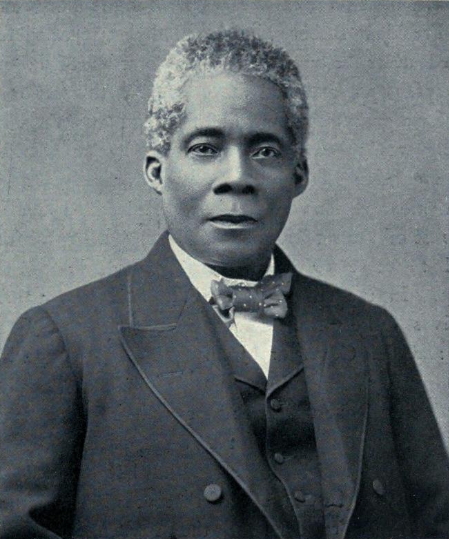
Edward Wilmot Blyden
Biographical Details
Edward Wilmot Blyden
Biography
Introduction: The Titan of Global Pan-African Thought
Edward Wilmot Blyden (3 August 1832 – 7 February 1912) stands as one of the most consequential intellectual figures in the modern history of the African diaspora. Universally recognized as the "Father of Pan-Africanism," Blyden was a polymath of extraordinary proportions: a classical educator, multilingual linguist, Presbyterian theologian, globetrotting diplomat, and pioneering political philosopher. Born in the vibrant Caribbean port of Charlotte Amalie on the island of St. Thomas—then part of the Danish West Indies—Blyden transcended colonial boundaries to become the foremost defender of African racial dignity and cultural autonomy during the nineteenth century. His intellectual journey bridged three continents, weaving together Caribbean resilience, the antebellum racial struggles of North America, the pioneering nation-building experiments of Liberia, and the complex civilizational tapestries of British and Islamic West Africa.
At a historical moment when pseudoscientific racism and European colonial expansion sought to dehumanize people of African descent, Blyden articulated a revolutionary philosophical counter-narrative. He was the first modern thinker to coin and systemize the concept of the "African Personality," asserting that African peoples possessed a distinct, communal, and spiritual genius that was vital to the harmonious development of global civilization. His seminal writings, most notably his 1887 magnum opus Christianity, Islam and the Negro Race, fundamentally dismantled Eurocentric missionary assumptions and legitimized indigenous African social structures. Blyden’s enduring vision of race pride, educational decolonization, and continental self-determination laid the intellectual foundations upon which subsequent Caribbean and global Pan-African titans—such as Marcus Garvey, George Padmore, Aimé Césaire, and Frantz Fanon—would build their movements for liberation in the twentieth century.
Early Life and Formative Years in Charlotte Amalie, St. Thomas
Edward Wilmot Blyden was born on August 3, 1832, in Charlotte Amalie, the bustling harbor capital of St. Thomas in the Danish West Indies (modern-day United States Virgin Islands). He was the third of seven children born to Romeo and Judith Blyden, free and literate Black citizens of proud Igbo descent. Romeo Blyden was a skilled tailor of respected standing, while Judith was a talented dressmaker and educator. Growing up in an urban Danish Caribbean trading hub that served as an international entrepôt, young Edward was exposed from infancy to a cosmopolitan crosscurrent of languages and cultures, hearing Dutch, English, Spanish, Danish, and Caribbean Creole spoken across the wharves and markets of Charlotte Amalie.
In 1842, when Edward was ten years old, the Blyden family relocated temporarily to Puerto Cabello, Venezuela, where they resided for two years. During this period, the precocious youth quickly attained fluency in Spanish, demonstrating the formidable aptitude for philology that would become a hallmark of his adult scholarship. Upon returning to St. Thomas in 1844, Blyden came under the personal mentorship of the Reverend John P. Knox, an American Presbyterian clergyman who arrived to pastor the local Protestant Dutch Reformed Church. Knox was instantly captivated by Blyden’s sharp analytical intellect, voracious appetite for classical literature, and moral gravity, inviting the young boy into his private study to tutor him in theology, rhetoric, and classical languages.
Blyden's adolescence in the Virgin Islands unfolded against a backdrop of momentous revolutionary upheaval. In July 1848, when Blyden was fifteen, thousands of enslaved laborers on neighboring St. Croix rose in a coordinated rebellion led by Moses "General Buddhoe" Gottlieb, forcing Danish Governor Peter von Scholten to proclaim the immediate emancipation of all enslaved people in the Danish West Indies. Witnessing this dramatic assertion of Black humanity left an indelible impression on the young Blyden, instilling within him a permanent conviction that the liberation of Black people required unwavering moral resolve, collective solidarity, and an unshakeable defense of human dignity. This atmosphere of resistance in the Virgin Islands would later inspire subsequent generations of freedom fighters, including Crucian labor leaders during the 1878 Fireburn and twentieth-century civil rights advocates such as David Hamilton Jackson and cultural pioneer Alton Augustus Adams.
Racial Rejection in America and the Exodus to Liberia (1850–1851)
Recognizing Blyden's extraordinary academic brilliance and deep spiritual conviction, Reverend Knox arranged for the eighteen-year-old youth to travel to the United States in May 1850, intending for him to enter theological college and prepare for the Presbyterian ministry. Blyden arrived in North America in the company of Knox's wife, expecting his intellectual merits to speak for themselves. Instead, he collided head-on with the virulent institutional white supremacy of antebellum America. In rapid succession, Blyden applied for admission to Rutgers Theological Seminary in New Brunswick, New Jersey, and two additional Presbyterian seminaries; all three institutions summarily refused him entry solely on account of his African ancestry.
The rejection occurred in the volatile shadow of the Compromise of 1850 and the passage of the draconian Fugitive Slave Act, which legally mandated the capture of escaped slaves even within free northern states and placed every free Black person under perpetual threat of kidnapping and re-enslavement. Disillusioned by the hypocrisy of white American Christian institutions that preached the brotherhood of man while violently enforcing racial caste, Blyden realized that America offered no dignified future for an ambitious Black scholar seeking unfettered intellectual growth.
During this crisis of faith and geography, Blyden encountered officials of the American Colonization Society (ACS) and the Presbyterian Board of Foreign Missions, who proposed an alternative horizon: the young republic of Liberia, established on the West African coast as a sovereign haven for free Black emigrants. Refusing to submit to second-class status in the United States, Blyden embraced the call of ancestral repatriation. In December 1850, he boarded the packet ship Edgar in Baltimore, sailing across the Atlantic Ocean and arriving in the harbor of Monrovia on January 26, 1851. Stepping foot onto the soil of Africa at age eighteen, Blyden transformed what began as an agonizing personal trauma of racial exclusion into a lifelong, majestic mission of continental redemption.
Linguistic Mastery and Educational Leadership at Liberia College
Upon his arrival in Monrovia, Blyden immediately enrolled at the newly founded Alexander High School, a Presbyterian preparatory academy directed by the Reverend David A. Wilson. Demonstrating a phenomenal capacity for scholarly acquisition, Blyden rapidly mastered Latin, ancient Greek, and biblical Hebrew, astonishing his instructors with his command of classical philology and philosophical exposition. By 1853, while still a student, he was appointed assistant tutor; by 1858, following Wilson's departure, Blyden was appointed Principal of Alexander High School. That same year, having completed rigorous theological examinations, he was formally ordained as a Presbyterian minister by the Presbytery of West Africa.
Blyden's linguistic horizons expanded far beyond the European classical canon. Recognizing that Arabic was the lingua franca of commerce, diplomacy, and scholarship across vast swaths of interior West Africa, Blyden embarked on a dedicated, self-directed quest to master the language. In 1866, with financial support from benefactors, he undertook an arduous six-month expedition to the Middle East, residing in Beirut (where he attended lectures at the Syrian Protestant College) and Cairo, immersing himself in classical Quranic Arabic and Islamic jurisprudence. He became one of the few Western-educated scholars of his era completely fluent in Arabic, allowing him to converse and negotiate directly with Muslim scholars, emirs, and merchants across the West African hinterland.
In 1862, following the establishment of Liberia College in Monrovia, Blyden was appointed the inaugural Professor of Greek and Latin Languages and Literature. He immediately became the institution's intellectual engine. Blyden argued vigorously that higher education in Africa must reject the uncritical mimicry of European academic models. In his celebrated 1881 inaugural address as President of Liberia College—a post he held with distinction from 1880 to 1884—he laid out a revolutionary pedagogical vision for an autonomous African university. He demanded that classical studies be balanced with the systematic study of indigenous African languages, African customary laws, folklore, and African history. He sought to relocate the college from the coastal Americo-Liberian enclave of Monrovia into the interior, aiming to bridge the deep social divide between coastal settlers and indigenous tribal populations.
"The African must advance by methods of his own. He must possess a power distinct from that of the European. It has been proved that he cannot acquire all of European civilization without losing his own identity. We must not surrender our personality; if you surrender your personality, you have nothing left to give the world." — Edward Wilmot Blyden, Inaugural Address as President of Liberia College (1881)
Political Battles, Statesmanship, and Diplomatic Service at the Court of St. James
Blyden's immense intellectual stature inevitably drew him into the turbulent vortex of Liberian statecraft. In 1864, President Daniel Bashiel Warner appointed the 32-year-old Blyden as Liberia's Secretary of State. In this executive cabinet post, Blyden sought to reorient the republic's entire geopolitical orientation. He vehemently opposed the coastal merchant elite who dominated the True Whig Party and the Republican establishment, accusing them of maintaining a superficial, Euro-American caste system that exploited and marginalized the native African population. Blyden championed a bold policy of continental integration: he demanded the granting of full citizenship and legislative representation to indigenous Africans, advocated for the aggressive expansion of Liberia’s borders into the interior, and called for an influx of dark-skinned Black emigrants from the Caribbean and the United States to build an agrarian African democracy.
These radical positions provoked violent hostility from the light-skinned, mixed-race Americo-Liberian ruling oligarchy. When Blyden aligned himself with President Edward James Roye—a dark-skinned pure Black statesman who was elected president in 1869 on a platform of interior development and racial parity—political tensions boiled over into civil insurrection. In October 1871, a violent political coup led by rival coastal factions deposed President Roye (who was tragically killed shortly thereafter). A lynch mob targeted Blyden in Monrovia, forcing him to flee for his life under cover of darkness to the British colony of Sierra Leone.
Despite this political trauma, Blyden’s international standing remained untouchable. He returned to public service repeatedly, serving as Liberia’s Minister of the Interior from 1880 to 1882 and contesting the Liberian presidency as an independent reform candidate in 1885. Furthermore, Blyden served as the young republic's most formidable diplomatic asset on the world stage. Between 1877 and 1878, and again in 1892, Blyden was commissioned as Liberia’s Minister Plenipotentiary and Envoy Extraordinary (Ambassador) to the Court of St. James in London. In this role, he made history as one of the very first Black diplomats ever accredited to the supreme royal court of a European imperial power.
At the Court of St. James, Blyden captivated Victorian London with his aristocratic bearing, linguistic erudition, and eloquent oratory. He was received by Queen Victoria, engaged in philosophical dialogues with Prime Minister William Ewart Gladstone, and befriended leading British scholars, parliamentarians, and abolitionists. Blyden utilized his London posting to defend the territorial sovereignty of Liberia against encroaching British and French imperial ambitions, fiercely negotiating border treaties and securing international recognition for African sovereignty. Remarkably, when the impoverished Liberian legislature repeatedly failed to transmit his diplomatic salary, Blyden endured severe personal financial privation, relying on his own resourcefulness and book royalties to maintain the dignity of Liberia’s legation in the British capital. In 1905, he concluded his formal diplomatic career by serving as Liberia’s Minister Plenipotentiary to the Republic of France in Paris.
Intellectual Magnum Opus: Christianity, Islam and the Negro Race (1887)
In 1887, Blyden published the masterwork that sealed his immortality in world philosophy: Christianity, Islam and the Negro Race, printed in London by W.B. Whittingham & Co.. The book—a collection of meticulously argued essays, lectures, and sociological treatises—sent profound shockwaves throughout the academic, missionary, and theological establishments of Europe, America, and West Africa.
In this groundbreaking text, Blyden offered the first comprehensive comparative analysis of how the two dominant world religions interacted with African societies. With searing analytical clarity, he argued that European Christian missionary efforts in Africa, despite good intentions, had exerted a psychologically crippling and denationalizing effect upon African converts. European Christianity, Blyden asserted, arrived entangled with white racial supremacy, cultural arrogance, and European aesthetics. It taught Africans to despise their ancestral traditions, reject their indigenous languages, and view themselves as perpetual subordinates to white spiritual masters, instilling a debilitating "slave psychology" that undermined racial self-reliance.
Conversely, Blyden offered a daring and controversial defense of Islam's role in African development. Drawing upon his extensive travels through the West African interior and his direct engagements with Mandinka and Fulani scholars, Blyden demonstrated that Islam had historically integrated seamlessly into African cultures without destroying indigenous selfhood. Islam, he argued, brought universal brotherhood, literacy, civic discipline, sobriety, and architectural advancement, while allowing Africans to retain their cultural autonomy, racial pride, and political agency. Unlike the racial segregation endemic to Western Christianity, Islam treated all believers, regardless of skin color, with authentic egalitarian fraternity.
"Africa may yet prove to be the spiritual conservatory of the world. When the civilised nations, in consequence of their wonderful material development, shall have had their spiritual susceptibilities blunted through the agency of a captivating and absorbing materialism, it may be that they have to resort to Africa to recover some of the simple elements of faith." — Edward Wilmot Blyden, Christianity, Islam and the Negro Race (1887)
Blyden did not seek the wholesale conversion of Africa to Islam; rather, he issued a prophetic summons for the creation of an Independent African Church—an ecclesiastical body entirely led, financed, and doctrinally rooted in African soil, free from European missionary paternalism. His theological critique inspired the burgeoning "Ethiopianism" movement across Southern and West Africa, which saw indigenous African Christians break away from European denominations to form self-governing churches.
The African Personality, Cultural Autonomy, and the Sierra Leone Years
Central to Blyden’s enduring philosophical system was his conceptualization of the "African Personality". In a series of influential lectures delivered across West Africa and Great Britain—most notably his 1893 landmark address Study and Race delivered before the Young Men's Literary Association in Freetown—Blyden systematically articulated a doctrine of cultural pluralism and racial integrity. Blyden rejected the Eurocentric thesis that humanity progressed along a single hierarchical ladder with European civilization at the apex. Instead, he argued that each human race possessed a distinct, God-given genius and mission. While European civilization was characterized by aggressive scientific inquiry, technological conquest, individualism, and relentless commercial materialism, African civilization was characterized by deep spiritual receptivity, communion with nature, egalitarian community cohesion, and intuitive artistic expression.
"It is sad to think that there are some Africans, especially among those who have enjoyed the advantages of foreign training, who are blind enough to the radical facts of humanity as to say, 'Let us do away with our African personality and be lost, if possible, in another race.' Preach this doctrine as much as you like, no one will do it, for no one can do it, for when you have done away with your personality, you have done away with yourselves. Your place has been assigned you in the universe as Africans, and there is no room for you as anything else." — Edward Wilmot Blyden, Study and Race (1893)
Blyden's later career was deeply entwined with the British colony of Sierra Leone, where he found an intellectually vibrant and welcoming home. Following his exile from Liberia in 1871, Blyden founded and edited The Negro newspaper in Freetown in 1872, the very first English-language periodical in West Africa explicitly dedicated to promoting race solidarity and Pan-African consciousness. The colonial government of Sierra Leone repeatedly enlisted Blyden’s unique diplomatic and linguistic talents. In 1872 and 1873, Governor Sir Arthur Kennedy appointed him as a special diplomatic commissioner to the powerful Muslim kingdoms of the interior, including Falaba and Timbo (in modern-day Guinea). Traveling without military escort, Blyden established vital treaties of commerce and amity, earning the profound respect of Islamic monarchs.
From 1901 to 1906, Blyden served as the Director of Mohammedan Education for the Sierra Leone government. In this capacity, he pioneered a culturally sensitive educational curriculum that introduced modern mathematics, English, and scientific instruction into Islamic madrasas while preserving Arabic literacy, Islamic religious training, and traditional cultural norms. Through this work, Blyden bridged centuries of suspicion between Western colonial authorities and the Muslim populations of West Africa, modeling how modern education could be synthesized harmoniously with Islamic and African traditions.
Sunset, Funeral in Freetown, and Immortal Global Legacy
In his final years, Blyden lived in Freetown, surrounded by a devoted circle of West African scholars, civic leaders, and younger intellectuals who revered him as the grand patriarch of African intellectual liberation. Even as his physical health waned due to respiratory ailments and old age, his brilliant mind remained alert, continuing to publish essays advocating for African self-rule, educational independence, and the preservation of native land tenure systems against European concessionaires.
On February 7, 1912, Edward Wilmot Blyden passed away at his home in Freetown at the age of 79. His death precipitated unprecedented collective mourning across West Africa and the Atlantic diaspora. His state funeral on February 9 was one of the largest public gatherings in the history of Sierra Leone. In a scene that symbolized his life’s mission of ecumenical and racial harmony, thousands of mourners from every walk of life walked behind his cortege: European colonial dignitaries, Christian bishops and clergymen, dozens of white-robed Muslim imams and scholars, indigenous chiefs from the interior, and thousands of ordinary citizens. He was laid to rest in the Muslim section of the Racecourse Cemetery in Freetown, in accordance with the profound affection and reverence he commanded within the Islamic community.
Blyden’s intellectual legacy is monumental, casting a long and radiant shadow across the twentieth century. He provided the core conceptual vocabulary that animated every major Black liberation movement of modern times. Marcus Garvey, whose Universal Negro Improvement Association (UNIA) mobilized millions across the Caribbean, the Americas, and Africa, drew directly upon Blyden’s teachings of racial self-reliance, African redemption, and the slogan "Africa for the Africans". George Padmore, the Trinidadian-born intellectual who organized the historic Fifth Pan-African Congress in Manchester in 1945, explicitly cited Blyden as the ideological forefather of scientific Pan-Africanism. In the French-speaking Caribbean and West Africa, Blyden’s doctrine of the African Personality served as the direct precursor to the Négritude movement developed by Aimé Césaire and Léopold Sédar Senghor. Post-colonial African statesmen such as Dr. Nnamdi Azikiwe of Nigeria and Osagyefo Dr. Kwame Nkrumah of Ghana heralded Blyden as the prophet who restored the African mind from colonial amnesia.
Today, the memory of Edward Wilmot Blyden is celebrated across the Caribbean and Africa. In the United States Virgin Islands, where his journey began on the hills of Charlotte Amalie, his legacy is commemorated through educational institutions and public honors. In Liberia and Sierra Leone, monuments and university buildings bear his name. More than a century after his passing, Edward Wilmot Blyden remains immortal: a boy from the Danish West Indies who challenged the empires of the world, reclaimed the dignity of an entire continent, and bequeathed to humanity the timeless truth of the African soul.
References
- Edward Wilmot Blyden - Wikipedia
- Edward Wilmot Blyden (1832–1912) - BlackPast.org
- Blyden, Edward Wilmot - Dictionary of African Christian Biography
- Edward Wilmot Blyden: Pan-Negro Patriot 1832-1912 - Hollis R. Lynch (Oxford University Press)
- Virgin Islands Public Figures: Edward Wilmot Blyden - Virgin Islands Department of Education
- Christianity, Islam and the Negro Race - Internet Archive
Major Contributions
- Edward Wilmot Blyden was a world-historical educator, diplomat, linguist, and philosopher universally celebrated as the 'Father of Pan-Africanism.
- ' Born in Charlotte Amalie, St. Thomas, he emigrated to Liberia in 1850 and became the nineteenth century's foremost champion of African cultural autonomy and racial dignity.
- Master of Latin, Greek, Hebrew, and Arabic, he served as Professor and President of Liberia College (1880–1884), pioneering the decolonization of African education by insisting on curricula centered on indigenous languages, history, and customs.
- As Liberia's Secretary of State and its Minister Plenipotentiary to the Court of St. James (1877–1878, 1892) and France (1905), Blyden became one of the first Black ambassadors to European powers, fiercely defending Liberian sovereignty against imperial encroachment.
- Blyden's intellectual masterwork, *Christianity, Islam and the Negro Race* (1887), revolutionized global thought by critiquing the denationalizing effects of European missionary Christianity and praising Islam's egalitarian integration into West African societies.
- He originated the foundational philosophy of the 'African Personality,' arguing that African civilization possessed an innate spiritual, communal, and artistic genius distinct from European materialism.
- Blyden's advocacy of race pride, continental repatriation, and self-determination provided the indispensable philosophical blueprint for subsequent Caribbean and global Pan-African giants, directly inspiring Marcus Garvey's Universal Negro Improvement Association, George Padmore's Pan-African movement, and the Négritude philosophy of Aimé Césaire and Léopold Sédar Senghor.
