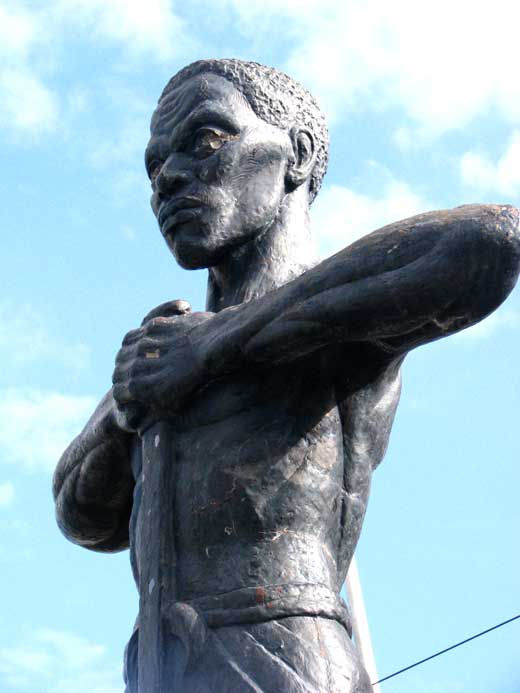
Sam Sharpe

Sam Sharpe
Biography
Early Life in the Chains of Slavery
Samuel "Sam" Sharpe, affectionately known to his followers as "Daddy Sharpe," was born into the brutal and dehumanizing system of plantation slavery in the parish of St. James, Jamaica, around 1801. Born on a plantation owned by Samuel and Jane Sharpe, his early life was shaped by the harsh realities of the Caribbean sugar economy, a system built on the blood, sweat, and uncompensated labor of African captives and their descendants. The early 19th century in Jamaica was a period of simmering tension. The British abolitionist movement was gaining momentum across the Atlantic, while the local plantocracy desperately clung to their violent, exploitative economic model. Despite being born into bondage, Sharpe possessed a brilliant, inquiring mind and an indomitable spirit. In a society that actively criminalized the education of enslaved people, Sharpe achieved the extraordinary feat of teaching himself to read and write.
Intellectual Awakening and Literacy
Sharpe's literacy was a revolutionary act in itself. It provided him with the key to unlock the intellectual and theological debates of his time. He avidly read local and international newspapers, following the abolitionist debates in the British Parliament. He also immersed himself in the Bible, extracting profound philosophical and moral truths. Sharpe became a devoted member and eventually a deacon at the Burchell Baptist Church in Montego Bay. The Native Baptist movement in Jamaica was unique; it blended orthodox Christian teachings with African spiritual traditions, providing a rare space where enslaved individuals could exercise autonomy and leadership. As a deacon, Sharpe was granted a "ticket" that allowed him to travel between estates to preach. This mobility was crucial. He used his pulpit not just to save souls, but to awaken minds.
The Historical and Theological Context
To truly understand the magnitude of Sam Sharpe's achievements, one must examine the oppressive architecture of Jamaican colonial society in the 1820s and 1830s. The plantocracy operated a regime of terror, utilizing draconian laws to monitor every aspect of an enslaved person's existence. In this panopticon of suffering, the Native Baptist Church emerged as an underground sanctuary. Unlike the established Anglican Church, which was firmly aligned with the interests of the slaveholders and preached subservience, the Native Baptist movement resonated with the visceral spiritual needs of the enslaved. Sharpe’s ascent to the role of a deacon was a testament to his immense charisma and his ability to articulate the collective agony and the deferred dreams of his people. He didn’t merely preach the gospel; he weaponized it against the institution of slavery, pointing out the glaring hypocrisy of a supposedly Christian empire sanctioning the torture of human beings.
The Ideological Foundation for Freedom
Sharpe's theology was fundamentally liberationist. He interpreted the Christian gospel as a mandate for physical and spiritual freedom, preaching that no man had the right to hold another in bondage, as all were equal in the eyes of God. He systematically educated his congregation about the abolitionist efforts in England, convincing many that the British Crown had already granted them freedom, but that the local planters were maliciously withholding it. This belief, though factually premature, provided the ideological fuel for mass mobilization. By late 1831, Sharpe had conceptualized a brilliant and unprecedented strategy: a widespread, organized campaign of passive resistance.
"I would rather die upon yonder gallows than live my life in slavery."
Strategic Economic Resistance
Sharpe’s organizational genius lay in his sophisticated understanding of economics. He recognized that the vast fortunes of the absentee planters in England and the local overseers were entirely dependent on the uninterrupted processing of sugar cane. Sugar cane must be harvested and milled quickly before the sucrose degrades. By timing his proposed strike immediately after the brief respite of the Christmas holidays—the narrow window before the intensive harvest season began—Sharpe aimed to paralyze the economic lifeblood of the colony. It was a masterclass in strategic leverage.
The plan was for the enslaved workers to lay down their tools and refuse to work unless they were officially recognized as free men and paid a fair wage for their labor. Sharpe moved clandestinely from estate to estate in the western parishes, holding secret midnight meetings. He swore his followers to an oath of solidarity on the Bible, demanding strict discipline and non-violence. He believed that if they simply refused to work, the plantation owners would be forced to capitulate without a drop of blood being shed. However, the sheer scale of the mobilization and the deep-seated anger of the enslaved population made the strike impossible to contain as a purely peaceful protest.
The Baptist War (The Christmas Rebellion)
On December 27, 1831, the Kensington Estate in St. James was set ablaze, lighting up the night sky and serving as the undeniable signal that the strike had transformed into a full-scale armed rebellion. This uprising became known as the Baptist War, or the Christmas Rebellion. It was the largest slave revolt in the history of the British Caribbean, eventually involving an estimated 60,000 enslaved people across several parishes. The rebels engaged in guerrilla warfare, burning plantation houses and destroying the infrastructure of the sugar industry.
The colonial response was swift, brutal, and overwhelming. The British military, aided by local white militias, ruthlessly crushed the rebellion within a matter of weeks. The retaliation was horrific; hundreds of enslaved people were killed in skirmishes, and hundreds more were subjected to summary executions and brutal floggings without trial.
Trial, Execution, and Lasting Legacy
Sam Sharpe was captured in the aftermath of the rebellion. He was subjected to a show trial and sentenced to death by hanging. On May 23, 1832, he was executed in Montego Bay. While standing on the gallows, he delivered his immortal words, choosing death over continued subjugation. Though the Baptist War was a military defeat, it was a monumental political victory. The sheer scale, organization, and devastation of the rebellion sent shockwaves through London. It unequivocally demonstrated to the British Parliament that the institution of slavery in Jamaica was entirely unsustainable and that the enslaved population would continue to shed blood until they were free.
Impact on Emancipation and National Hero Status
Less than a year after Sharpe's execution, the British Parliament passed the Slavery Abolition Act of 1833, officially ending the institution of slavery across the British Empire. Sam Sharpe's martyrdom was the catalyst that finally broke the chains of bondage in Jamaica. His legacy is one of unparalleled courage, intellectual brilliance, and moral clarity. In 1982, the Jamaican government rightfully bestowed upon him the Order of National Hero, cementing his status in the pantheon of figures like Nanny of the Maroons and Paul Bogle. Today, his face adorns the Jamaican $50 banknote, and the site of his execution is now known as Sam Sharpe Square, a permanent monument to the man who laid down his life so that a nation could be free.
Major Contributions
- Sam Sharpe's most critical contribution to world history was masterminding the 1831–1832 Baptist War (Christmas Rebellion) in Jamaica.
- By orchestrating a massive campaign of passive resistance and labor strikes that evolved into a widespread uprising involving 60,000 enslaved individuals, he directly destabilized the colonial plantocracy.
- His strategic targeting of the sugar cane harvest laid bare the severe economic vulnerabilities of the slave system.
- Although the rebellion was crushed and cost Sharpe his life, the sheer magnitude of the revolt shocked the British Parliament, accelerating the passage of the Slavery Abolition Act of 1833.
- As one of Jamaica's National Heroes, Sharpe's legacy continues to embody the intellectual and theological fight for human liberation in the Caribbean.