Paul Bogle

Paul Bogle
Biography
Paul Bogle
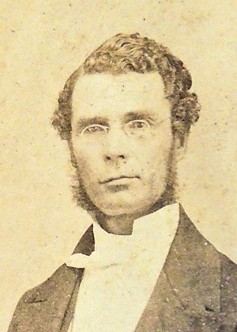
Paul Bogle (c. 1822 – 1865) was a Jamaican Baptist deacon, political activist, and a towering figure in the fight for social justice in post-emancipation Jamaica. He is most famous for leading the 1865 Morant Bay Rebellion, a pivotal uprising that fundamentally altered the political and social landscape of the island. Living in an era when the formal abolition of slavery had failed to bring true freedom or equality to the Black majority, Bogle dedicated his life to advocating for the impoverished, the disenfranchised, and the oppressed. Today, he is revered as a National Hero of Jamaica, a martyr for civil rights, and an enduring symbol of resistance against systemic injustice.
Early Life and Post-Emancipation Jamaica
Paul Bogle was born around 1822, likely in the parish of St. Thomas-in-the-East, Jamaica. He lived his early years during the twilight of legalized slavery, witnessing the passage of the Emancipation Act in 1834 and the final abolition of the apprenticeship system in 1838. However, the end of slavery did not mean the end of oppression.
The white plantocracy—the wealthy owners of the sugar estates—retained strict control over the island's land, economy, and legal system. For the newly freed Black peasants, life was a continuous struggle for survival. Wages on the estates were kept artificially low, and severe droughts and crop failures in the early 1860s brought widespread starvation. Furthermore, the legal system was heavily biased; local magistrates were often plantation owners who used their power to penalize Black workers and evict them from their lands.
Politically, the Black majority was completely silenced. The colonial assembly enforced a high poll tax that effectively stripped the right to vote from almost anyone who wasn't a wealthy landowner. It was in this cauldron of misery, exploitation, and disenfranchisement that Paul Bogle emerged as a leader.
Religious Leadership and Political Awakening
Bogle was a successful farmer and a man of some means, owning about 500 acres of land in the rural district of Stony Gut. His true influence, however, stemmed from his role as a deacon in the Native Baptist Church. The Native Baptist movement was independent of the European missionary churches; it integrated African spiritual traditions and became a vital space for community organizing and political discourse among Black Jamaicans.
At his chapel in Stony Gut, Bogle preached a gospel of spiritual equality and social justice. He formed a close alliance with George William Gordon, a wealthy mixed-race businessman and politician who was one of the few voices in the Jamaican Assembly advocating for the rights of the poor. Gordon recognized Bogle’s leadership qualities and ordained him as a deacon. Together, they organized the people of St. Thomas, urging them to unite and demand fair treatment.
The Road to Rebellion
By 1865, tensions in Jamaica had reached a boiling point. The American Civil War had disrupted trade, driving up the cost of basic goods, while a severe outbreak of cholera and smallpox ravaged the poorest communities.
In desperation, the peasants of St. Ann parish drafted a petition to Queen Victoria, begging for access to Crown lands so they could farm and feed their families. The response they received, known as "The Queen's Advice," was entirely devoid of sympathy. Governor Edward John Eyre, a notorious racist who despised the Black population, enthusiastically distributed the decree. The document essentially told the peasants to work harder for the planters and not to expect any handouts.
"Skin for skin, the iron has entered our souls. We have been oppressed for too long, and we must demand our rights. We will march for justice, for we are the children of God, not the slaves of men." — A sentiment frequently attributed to Paul Bogle during his sermons at Stony Gut.
Infuriated by this dismissal, Bogle began organizing secret meetings. In August 1865, he led a deputation of small farmers on a grueling 45-mile march from Stony Gut to the capital, Spanish Town, to meet with Governor Eyre and present their grievances. Eyre blatantly refused to see them. This rejection convinced Bogle that peaceful petitioning within the corrupt colonial system was futile.
The Morant Bay Rebellion
The spark that ignited the powder keg occurred on October 7, 1865. Bogle and a group of supporters attended a trial at the Morant Bay courthouse. When a Black man was convicted and heavily fined on a trivial charge, a spectator protested. The police attempted to arrest the protester, but Bogle and his men intervened, overpowering the police and freeing the man.
Warrants were immediately issued for Bogle's arrest. On October 10, when police arrived at Stony Gut to apprehend him, they were beaten back by the villagers. Knowing that the government would retaliate with brutal force, Bogle decided to take the offensive.
On October 11, 1865, Paul Bogle led several hundred men and women, armed with sticks, cutlasses, and a few muskets, into Morant Bay. They marched in military formation to the courthouse where the local vestry was meeting. The confrontation quickly escalated. The volunteer militia panicked and fired into the crowd, killing seven protesters. In response, the enraged crowd rioted. They set fire to the courthouse and surrounding buildings, killing the custos (chief magistrate) and over a dozen other officials and militia members.
Martial Law and Execution
The retaliation from Governor Eyre was swift, merciless, and wildly disproportionate. Eyre declared martial law in the eastern parishes and dispatched heavily armed troops to crush the uprising. Over the next few weeks, soldiers engaged in a campaign of terror, burning over a thousand homes in Stony Gut and surrounding villages.
Nearly 500 Black Jamaicans were killed, many of them flogged and executed without trial. Eyre also used the rebellion as a pretext to eliminate his political rival, George William Gordon, having him illegally transported to Morant Bay, subjected to a sham trial, and hanged, despite Gordon having no direct involvement in the riot.
Paul Bogle retreated into the Blue Mountains but was eventually captured by Maroon forces who were working with the colonial government. He was brought back to Morant Bay, briefly tried by a court-martial, and hanged on October 24, 1865, at the very courthouse he had burned.
Legacy
While Bogle was executed as a traitor, his sacrifice fundamentally changed Jamaica. The sheer brutality of Eyre’s crackdown caused a massive scandal in England, leading to a Royal Commission of Inquiry. Eyre was recalled and dismissed in disgrace.
The crisis also forced the Jamaican Assembly to dissolve itself, leading to the imposition of direct Crown Colony rule. While not fully democratic, this transition stripped power from the corrupt local plantocracy and paved the way for crucial social reforms in education, health, and infrastructure.
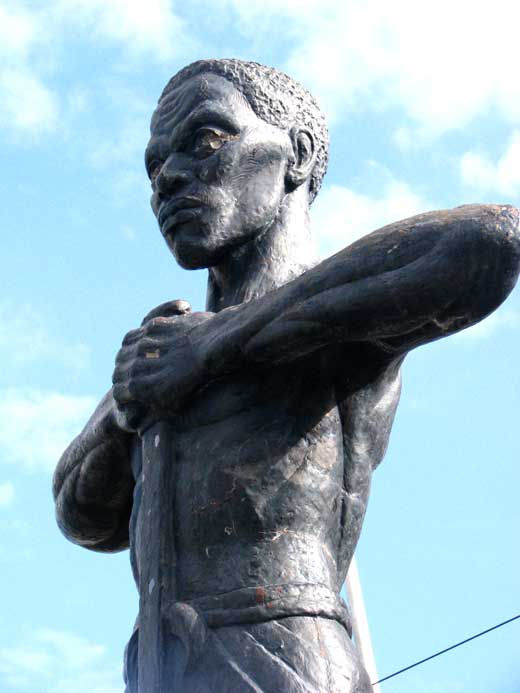
In 1969, Paul Bogle was rightfully recognized as a National Hero of Jamaica. His image has been featured on the two-dollar note and the ten-cent coin. Bogle remains a powerful inspiration, a testament to the fact that when marginalized people stand up against institutional oppression, they can alter the course of history.
Major Contributions
- Paul Bogle's most significant contribution was his unwavering advocacy for the civil, economic, and political rights of the Black Jamaican working class following the abolition of slavery.
- Through his leadership at the Stony Gut Native Baptist Church, he organized disenfranchised peasants and demanded fair wages, land rights, and an end to judicial corruption.
- By leading the Morant Bay Rebellion of 1865, Bogle forced the British Empire to confront the brutal realities of post-emancipation exploitation.
- Although the rebellion was violently suppressed, it directly led to the dismantling of the oppressive, planter-controlled Jamaican Assembly and the institution of Crown Colony rule.
- This shift in governance eventually facilitated essential social reforms that improved the lives of the poor.
- He is remembered as a martyr for justice and a founding father of Jamaican civil rights.