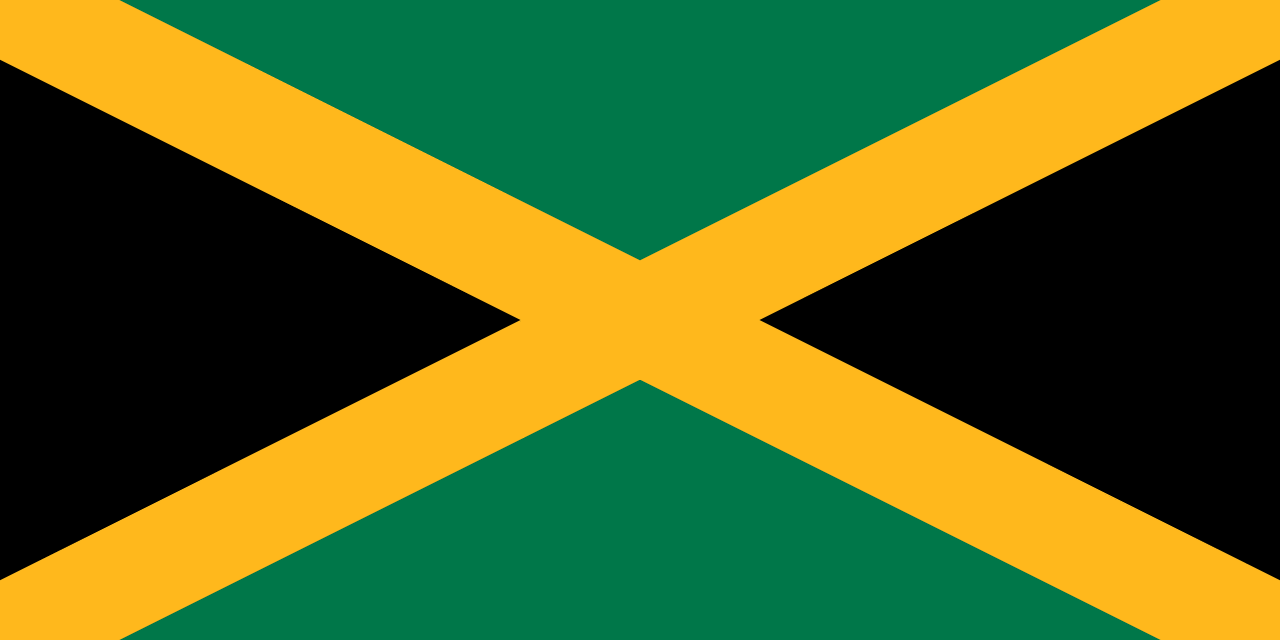
Jamaica
The land of wood and water, known for its revolutionary spirit and global cultural impact.
Figures from Jamaica
Historically documented individuals of note.

Alexander Bustamante
### Early Life: The Making of a Revolutionary Sir William Alexander Clarke — the man the world would come to know as **Alexander Bustamante** — was born on **February 24, 1884**, in the rural parish of Blenheim, Hanover, Jamaica [1]. He was the son of Robert Constantine Clarke, a planter of Irish descent, and Mary Clarke (née Wilson), a Jamaican woman of mixed African and European heritage. The family's modest means meant that formal schooling was limited, but young William's intellectual curiosity and natural charisma more than compensated for any gaps in his education. Jamaica in the 1880s was a colony firmly under the yoke of the British Crown — a plantation society still bearing the deep psychological and economic scars of emancipation, which had come only fifty years prior. The sugar industry, long the economic engine of the Caribbean, was in terminal decline, and the black working class — freed from the chains of slavery but not from the chains of poverty — labored under conditions that remained exploitative and dehumanizing. This was the world into which Bustamante was born, and it would ultimately be the world he would dedicate his life to transforming. In 1905, at just 21 years of age, Bustamante left Jamaica and embarked on a remarkable thirty-year odyssey across the Americas and beyond. He lived and worked in **Cuba, Panama, and the United States**, taking on an eclectic array of roles: store clerk, dairy farmer, transportation worker, beekeeper, hospital administrator, and, ultimately, a reportedly successful Wall Street speculator [2]. It was during these years of wandering that he shed his birth surname and adopted the name **Bustamante** — which he claimed was in honor of a Spanish sea captain who had befriended and mentored him. He formalized the name change by deed poll in 1944, long after the name had become a legend in its own right. These decades abroad were not merely years of personal adventure — they were an education in the nature of capital, class struggle, and racial inequality on an international scale. By the time he returned to Jamaica permanently in the early 1930s, Bustamante had developed a sophisticated, street-level understanding of economic injustice. He settled in Kingston and initially worked as a **moneylender**, a role that brought him into daily, visceral contact with the poverty and systemic exploitation that the Jamaican poor endured. He was moved to action. ### Rise to Power: Voice of the Dispossessed Bustamante began his public life not with a political campaign, but with a pen. He wrote frequent, pointed, and often fiery letters to the *Daily Gleaner* and to newspapers in Britain, denouncing the colonial system and its devastating human cost [2]. His tone was uncompromising, his language accessible to the common man, and his arguments morally compelling. The people read him, recognized themselves in his words, and elevated him into a folk hero before he had ever stood on a public platform. > *"I am the masses of Jamaica."* > — Sir Alexander Bustamante That self-identification was not mere rhetoric — it was a political philosophy. Bustamante's genius lay in his ability to collapse the distance between himself and those he represented. Standing at a commanding **6 feet 5 inches tall**, with a shock of white hair, piercing eyes, and a theatrical charisma, he was an unforgettable physical presence. He spoke in the language of the people, used humor and drama to hold crowds, and never allowed colonial formality to diminish the urgency of his message. By the late 1930s, the conditions for revolution were ripe. The global Great Depression had devastated Caribbean economies, wages had been slashed, unemployment was rampant, and the British colonial administration offered little relief. The working class of Jamaica — dockworkers, sugar cane cutters, domestic servants — were on the precipice of open revolt. ### The Watershed of 1938 The year **1938** is the defining axis of Bustamante's political life. In May of that year, a violent clash erupted at the **Frome sugar estate** in Westmoreland, where workers demanding higher wages were met with police gunfire. The **Frome riots**, as they became known, sent shockwaves through the island and ignited a broader, island-wide labor uprising. Bustamante rushed to Frome to stand with the workers. He became their voice before the authorities, their negotiator, their protector. As strikes spread to dockworkers, transport workers, and beyond, Bustamante emerged as the **preeminent spokesman of the Jamaican working class** [3]. His exhortations to crowds — urging them to "stand firm" in their rightful demand for justice — cemented his status not just as a labor leader, but as the charismatic embodiment of a people's movement.  In 1937, he had already joined the Jamaica Workers and Tradesmen Union as treasurer, and out of the crucible of the 1938 uprisings, this organization evolved into the **Bustamante Industrial Trade Union (BITU)**, formally established in 1939. The BITU would become one of the most powerful and enduring labor organizations in the entire Caribbean — a vehicle not merely for workers' rights, but for mass political mobilization. The British colonial authorities took notice. Bustamante's assertive leadership and his growing influence among the masses made him a direct threat to the colonial order. He was arrested in 1938 and, in a move that only amplified his martyrdom and popular appeal, was **detained at Up Park Camp from 1940 to 1942** under the Defence of the Realm Act for alleged subversion and sedition [4]. His imprisonment transformed him from a labor leader into a national symbol. Crowds gathered outside the camp. His name was spoken with reverence. [Norman Washington Manley](/profiles/norman-washington-manley), his cousin and eventual political rival, played a pivotal role in securing his release and had been, alongside Bustamante, at the center of the 1938 upheaval, founding the **People's National Party (PNP)** that same year. ### From Labor Hall to Parliament: Building the JLP Upon his release in 1942, Bustamante made the pivotal transition from labor agitator to formal politician. In **1943**, he founded the **Jamaica Labour Party (JLP)**, giving the mass movement organized behind the BITU a direct vehicle for electoral politics [3]. The timing was fortuitous: the British government, under pressure from the 1938 uprisings across the Caribbean, had begun implementing constitutional reforms, most critically the granting of **Universal Adult Suffrage** in 1944 — giving every Jamaican adult the right to vote for the first time in the island's history. The JLP, riding on the groundswell of BITU membership and Bustamante's towering popularity, swept the 1944 general elections decisively. Bustamante now governed as the effective head of the Jamaican government, and he would serve in various capacities through the colonial twilight years. He served as the **first Chief Minister of Jamaica** from 1953 to 1955, navigating the complex negotiations between colonial structures and the growing demand for self-governance [1]. His relationship with Norman Manley — founder of the rival PNP — was one of the most fascinating and paradoxical in Caribbean political history: they were cousins who loved each other, founding fathers who competed bitterly, and ultimately joint architects of a new nation. While Manley championed the ideal of **Caribbean Federation** as a pathway to regional independence and strength, Bustamante grew increasingly skeptical of the **West Indies Federation** (established in 1958). He feared that a federal union would dilute Jamaican sovereignty and economically disadvantage the island [5]. ### The Independence Struggle and Jamaica's Birth as a Nation In a defining act of democratic courage, Manley called a **referendum in 1961** to let Jamaicans decide the question of federation. The electorate voted to withdraw. This result was an unambiguous validation of Bustamante's position, and it cleared the path for Jamaica to pursue its own independent statehood. In the general elections of April 1962, the JLP won a decisive victory, and on **August 6, 1962**, Jamaica became an independent nation — ending over 300 years of British colonial rule. At the stroke of midnight on Independence Day, the Union Jack was lowered and the black, gold, and green of the Jamaican flag rose in its place. **Sir Alexander Bustamante** stood before his people as the **first Prime Minister of independent Jamaica**, a title he would hold until 1967 [1]. The man born without privilege or position in a colonial backwater had, through sheer force of will, moral clarity, and political genius, midwifed an entire nation into existence. > *"The most important thing in this country is the dignity of the people."* > — Sir Alexander Bustamante His personal life, too, found its most enduring chapter at this time. In **1962**, he married **Gladys Longbridge**, who had served as his devoted private secretary for decades. She was his closest confidante and, many argued, the quiet power behind much of his public life [4]. Bustamante served as Prime Minister until 1967, shepherding Jamaica through the difficult early years of nationhood — establishing diplomatic relations, navigating Cold War geopolitics, and building the institutions of a young democracy. He retired from active politics that year and was **conferred the Order of National Hero in 1969**, the highest honor Jamaica bestows upon its citizens [2]. He lived out his final years in quiet dignity, passing away on **August 6, 1977** — precisely fifteen years to the day from Jamaican independence — at the remarkable age of 93. ### Legacy: The Father of the Nation Alexander Bustamante remains one of the most singular figures in Caribbean history. He was a man who arose not from the elite, but from the itinerant working class; not from a university, but from the school of life; not from privilege, but from deprivation transformed into empathy. His legacy encompasses the founding of the BITU, which gave generations of Jamaican workers a collective voice; the founding of the JLP, which anchored Jamaica's two-party democratic system; and the achievement of national independence, which remains the defining moment of Jamaican political history. He is remembered with statues, public holidays, and the perennial pride of a people who know that one of their own — born in a small parish in rural Hanover, with little schooling and no inherited advantages — grew to stand before kings and presidents as the father of a nation.
View Profile →
Bob Marley
### Introduction Robert Nesta Marley, globally celebrated as Bob Marley, stands as one of the most influential and iconic musicians of the 20th century. Born in the rural hills of Jamaica, his life journey transformed him from a marginalized youth in Kingston's ghettos to a global ambassador for reggae music, the Rastafari movement, and Pan-Africanism. His music transcended entertainment, becoming an anthem for liberation, social justice, and peace across the globe. Through his profound lyrical genius and charismatic stage presence, Marley gave a voice to the voiceless, elevating the struggles of the Third World to the forefront of global consciousness. Even decades after his passing, his legacy endures as a symbol of resistance against oppression and a beacon of universal love. ### Early Life in Nine Mile and Trench Town Bob Marley was born on February 6, 1945, in Nine Mile, a small, vibrant agricultural community in Saint Ann Parish, Jamaica. His birth was the result of an interracial union between Norval Sinclair Marley, a white Jamaican of English descent who worked as a plantation overseer and served in the Royal Marines, and Cedella Booker, a young Afro-Jamaican woman. Norval was largely absent from his son's life, and his family rejected the union, leaving Cedella to raise young Robert in the rural countryside. This mixed-race heritage deeply affected Marley's early life, as he often faced prejudice and a sense of alienation from both black and white communities, forcing him to forge his own identity. In the late 1950s, seeking better economic opportunities, Cedella relocated with Bob to Trench Town, a harsh, impoverished neighborhood in West Kingston. Trench Town was a melting pot of rural migrants and urban poor, characterized by government yard housing, fierce political rivalries, and severe economic deprivation. However, it was also a crucible of immense cultural creativity. Here, Marley was exposed to the rich musical traditions of mento, ska, and the rhythm and blues broadcasting from American radio stations. The struggles and everyday realities of Trench Town life would later become the central themes of his songwriting, anchoring his global message in the authentic experiences of the Jamaican underclass. ### The Birth of The Wailers and Musical Evolution In Trench Town, Marley formed a profound bond with Neville Livingston, famously known as [Bunny Wailer](/profiles/bunny-wailer), and Winston Hubert McIntosh, who would become legendary as [Peter Tosh](/profiles/peter-tosh). Together, they formed a vocal harmony group initially called the Teenagers, which eventually evolved into The Wailing Wailers. Under the mentorship of local musician Joe Higgs, who taught them vocal harmonies and the fundamentals of songwriting, the trio honed their craft in the local yards. In 1963, they caught the attention of Clement "Coxsone" Dodd, a pioneering Jamaican record producer who ran the influential Studio One label. Dodd recorded their first single, "Simmer Down," an urgent ska track appealing to the "rude boys" (street gangs) of Kingston to cease their violence. The song became a massive local hit, establishing the Wailers as voices of the urban youth. Throughout the 1960s, the group navigated the shifting musical landscape of Jamaica, transitioning from the upbeat tempos of ska to the slower, more soulful rhythms of rocksteady. During this period, Marley also briefly lived in the United States, working at a Chrysler plant in Delaware to earn money for his family and musical ambitions. ### Rastafari Awakening Upon his return to Jamaica in 1966, Marley's life took a definitive spiritual turn. The visit of Emperor Haile Selassie I of Ethiopia to Jamaica that same year profoundly impacted the island, catalyzing the growth of the Rastafari movement. Marley, along with Tosh and Wailer, began to deeply embrace Rastafari, adopting its dietary laws, growing dreadlocks, and incorporating its theology into his worldview. Rastafari provided Marley with a spiritual framework that interpreted the struggles of Black people through a biblical lens, identifying the oppressive establishment as "Babylon" and promoting a return to Africa, or "Zion," both physically and spiritually. > "My music will go on forever. Maybe it's a fool say that, but when me know facts me can say facts. My music will go on forever." — Bob Marley This spiritual awakening coincided with the birth of reggae, a genre characterized by its distinctive one-drop rhythm, heavy basslines, and socially conscious lyrics. The Wailers began working with visionary producer Lee "Scratch" Perry, resulting in groundbreaking tracks like "Soul Rebel" and "Duppy Conqueror." Perry's innovative studio techniques and the Wailers' profound lyricism created a completely new sound that resonated with the burgeoning Black consciousness movements worldwide. ### International Breakthrough and Island Records In 1972, a fateful meeting with Chris Blackwell, the founder of Island Records, propelled the Wailers onto the international stage. Blackwell, recognizing the rock-and-roll potential of reggae, provided the group with an unprecedented advance to record a full-length album in a professional studio. The result was *Catch a Fire* (1973), a critically acclaimed masterpiece that introduced reggae to global audiences. This was quickly followed by *Burnin'* (1973), which featured anthems like "Get Up, Stand Up" and "I Shot the Sheriff." The latter gained massive international exposure when Eric Clapton covered it in 1974, scoring a number-one hit in the US. Despite their growing success, internal tensions and the rigorous demands of touring led to the departure of [Peter Tosh](/profiles/peter-tosh) and [Bunny Wailer](/profiles/bunny-wailer) in 1974. Marley pressed on, restructuring the band as Bob Marley and the Wailers. He brought in the I-Threes (consisting of his wife Rita Marley, Marcia Griffiths, and Judy Mowatt) to provide vocal harmonies, further enriching the group's distinctive sound. The 1975 album *Natty Dread* solidified his solo stardom, featuring the poignant masterpiece "No Woman, No Cry."  ### Political Turmoil and the Smile Jamaica Concert By the mid-1970s, Jamaica was engulfed in severe political violence. The nation was fiercely divided between the democratic socialist People's National Party (PNP) led by [Michael Manley](/profiles/michael-manley) and the conservative Jamaica Labour Party (JLP) led by [Edward Seaga](/profiles/edward-seaga). Kingston's streets became battlegrounds for armed political factions. Marley, perceived as a figure of immense influence, found himself caught in the crossfire. In an effort to ease tensions, Marley agreed to headline the "Smile Jamaica" concert in December 1976, an event ostensibly organized by the government to promote peace. However, two days before the concert, armed gunmen stormed Marley's home at 56 Hope Road. Marley, his wife Rita, and his manager Don Taylor were shot and wounded. Remarkably, Marley survived and, displaying extraordinary courage, performed at the concert anyway, famously stating that the people trying to make the world worse don't take a day off, so why should he. ### Exile in London and Global Exodus Following the assassination attempt, Marley relocated to London, entering one of his most prolific and creative periods. Over the next two years, he recorded the monumental albums *Exodus* (1977) and *Kaya* (1978). *Exodus*, later named the Album of the Century by Time Magazine, perfectly balanced militant political anthems like "Exodus" and "Guiltiness" with universal messages of love and unity in tracks like "Jamming" and "One Love / People Get Ready." Marley returned to Jamaica in 1978 for the historic One Love Peace Concert. In a dramatic and highly symbolic moment, he called both [Michael Manley](/profiles/michael-manley) and [Edward Seaga](/profiles/edward-seaga) to the stage, forcing the bitter rivals to hold hands above their heads in a gesture of unity. ### Pan-Africanism and the Zimbabwe Independence Concert Marley's influence extended deeply into the African continent, where he was revered as a prophet of liberation. He passionately supported the struggles against apartheid in South Africa and colonialism across the continent. In 1980, Bob Marley and the Wailers were invited to perform at the official independence ceremony of Zimbabwe. Spending tens of thousands of dollars of his own money to transport his equipment, Marley played to a jubilant crowd, cementing his status as a champion of African liberation. His album *Survival* (1979) remains one of the most powerful expressions of Pan-African solidarity in musical history. ### Illness, Death, and Enduring Legacy In 1977, Marley was diagnosed with acral lentiginous melanoma, a rare form of skin cancer, which originated under his toenail. Citing his Rastafari beliefs, which advise against the amputation of body parts, Marley refused the recommended treatment of amputating the toe. The cancer eventually spread throughout his body. Despite his declining health, he continued to tour extensively, completing his massive Uprising Tour in 1980. Bob Marley passed away on May 11, 1981, at Cedars of Lebanon Hospital in Miami, Florida, at the age of 36. His final words to his son Ziggy were reportedly, "Money can't buy life." Marley was given a state funeral in Jamaica, blending elements of Ethiopian Orthodoxy and Rastafari tradition, and was buried in a chapel near his birthplace in Nine Mile. He received the Order of Merit, Jamaica's third-highest honor. Today, Bob Marley is more than a musician; he is an international symbol of peace, human rights, and anti-colonial resistance. His music continues to inspire successive generations across the globe, ensuring that the voice of the "Tuff Gong" remains eternal.
View Profile →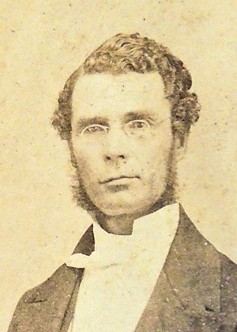
George William Gordon
### Introduction: The Martyr of Morant Bay George William Gordon stands as one of the most towering and sacrificial figures in the history of Jamaica and the broader Caribbean [1]. Proclaimed a National Hero of Jamaica in 1969 alongside his political ally [Paul Bogle](/profiles/paul-bogle), Gordon was a wealthy biracial landowner, magistrate, business magnate, and member of the Jamaican House of Assembly who defied the prejudices of his class to become the uncompromising champion of the impoverished black peasantry [2]. Operating in the tumultuous post-emancipation era of the mid-19th century, Gordon waged a relentless political and constitutional battle against colonial corruption, judicial oppression, and systemic racism [3]. His struggle reached a tragic and defining climax during the 1865 Morant Bay Rebellion, culminating in his illegal martial law execution ordered by Governor [Edward Eyre](/profiles/edward-eyre) [2]. Gordon’s martyrdom shocked the British Empire, dismantled centuries of planter-controlled oligarchic governance, and laid the cornerstone for modern Jamaican democracy and racial justice [1].  ### Early Life and Rise to Wealth George William Gordon was born into slavery around 1820 on the Cherry Garden Estate in the parish of St. Andrew, near Kingston [3]. He was the second of eight children born to Joseph Gordon, a wealthy aristocratic Scottish planter and attorney who managed numerous sugar estates across Jamaica, and Ann Rattray, an enslaved black woman on his plantation [3]. Born into the complex socio-racial hierarchy of colonial Jamaica, the young George was largely neglected by his father during his early childhood and received little formal schooling [4]. However, possessing exceptional intelligence, remarkable drive, and an insatiable appetite for learning, Gordon taught himself reading, writing, mathematics, and commercial accounting [4]. At the age of ten, Gordon was sent to school in Jamaica and subsequently entered the commercial houses of Kingston as a clerk [3]. Demonstrating extraordinary business acumen, he established his own produce and timber merchant business by his late teens [4]. By his mid-twenties, Gordon had amassed an immense personal fortune [3]. He expanded his empire aggressively, investing heavily in urban real estate, agricultural shipping, and rural plantations across Jamaica [3]. In a remarkable turn of historical irony, when his white father Joseph Gordon fell into severe financial ruin during the economic downturn following the abolition of slavery in 1834, it was George William Gordon who paid off his father's vast debts and purchased the very Cherry Garden Estate where his mother had once been enslaved [3]. Despite achieving admission into the highest echelons of Jamaican economic elite, Gordon refused to adopt the callous attitudes of the white plantocracy, remaining deeply empathetic to the struggles of the newly emancipated black masses [5]. ### Political Awakening and Religious Conversion During the 1840s and 1850s, Gordon underwent a profound spiritual and political transformation [3]. Disillusionment with the hypocrisy and moral bankruptcy of the Anglican church—which served primarily as the ideological defender of the white planter class—led Gordon to convert to the Native Baptist faith [5]. He was deeply influenced by the egalitarian teachings of radical missionary abolitionists such as [William Knibb](/profiles/william-knibb) and the revolutionary memory of National Hero [Sam Sharpe](/profiles/samuel-sharpe), who had led the 1831 Christmas Rebellion [5]. Gordon established independent Baptist chapels across the island, preaching a gospel of spiritual liberation, racial equality, and self-reliance [1]. It was during his religious organizing in the eastern parish of St. Thomas-in-the-East that Gordon discovered a passionate local deacon named [Paul Bogle](/profiles/paul-bogle), ordaining him and establishing a lifelong political and spiritual alliance [2]. In 1850, Gordon entered colonial politics, winning election to the Jamaican House of Assembly as the representative for St. Thomas-in-the-East [3]. He also served as a Justice of the Peace and a parish magistrate [3]. In the Assembly, Gordon formed the backbone of the small "Town Party" opposition, consistently voting against measures intended to tax the peasantry and restrict their voting rights [4]. He used his platform to expose corrupt public officials, condemn the deplorable conditions of colonial prisons and poor-houses, and fight for public education and healthcare for the black working class [4]. ### Champion of the Peasantry and Clash with Governor Eyre By the early 1860s, Jamaica had plunged into an acute socio-economic crisis [5]. A succession of devastating droughts destroyed local subsistence crops, while the American Civil War disrupted international trade, causing the cost of imported foodstuffs and basic textiles to skyrocket [5]. Simultaneously, the planter-controlled Assembly enacted regressive taxation that fell heavily on poor smallholders while exempting plantation owners [4]. Worse still, the colonial judicial system was entirely controlled by planter-magistrates who routinely evicted black peasants from ancestral lands and denied them fair wages [5]. George William Gordon became the most vocal and fearless critic of this oppressive system [3]. His fiery advocacy brought him into direct, bitter conflict with Governor [Edward Eyre](/profiles/edward-eyre), an autocratic colonial administrator who despised black advancement and viewed any dissent as sedition [2]. When Gordon publicly exposed a white magistrate for locking a poor black man in an outhouse without food or water, Governor Eyre retaliated by arbitrarily stripping Gordon of his commission as a Justice of the Peace and removing him from the St. Thomas vestry [3]. Undeterred, Gordon purchased even more land in the parish, subdivided it into affordable plots, and sold them to black peasants to help them meet the property qualifications required to vote [4]. > "I feel it my duty to stand up for the poor and oppressed of this land. If Governor Eyre continues his course of despotic tyranny, the grievances of the people will burst forth in an avalanche that no colonial bayonet can restrain." — George William Gordon, public address on Jamaican conditions [4] ### The Undercurrents of Rebellion (1864–1865) Tensions reached a boiling point in 1865 following the "Underhill Letter" controversy [5]. Dr. Edward Underhill, secretary of the Baptist Missionary Society in Great Britain, wrote a letter to the British Colonial Office detailing the extreme starvation and suffering of the Jamaican peasantry [5]. Governor Eyre dismissed the report as slander, prompting Gordon to organize a series of massive public protests across the island known as the "Underhill Meetings" [5]. Gordon chaired the largest meeting in Kingston, drafting resolutions demanding immediate royal intervention and agrarian reform [4]. In response to the peasants' petitions, Queen Victoria’s government issued the infamous "Queen’s Advice," a callous document distributed by Governor Eyre which told impoverished black Jamaicans that their poverty was due to laziness and advised them to work harder for planter wages rather than seek government relief [3]. The publication of the Queen’s Advice provoked indignation and despair across the island [5]. In St. Thomas-in-the-East, Gordon counseled [Paul Bogle](/profiles/paul-bogle) and local laborers to organize peaceful deputations to demand justice before the courts, warning the colonial administration that the people's patience was exhausted [2]. ### The Morant Bay Rebellion and Arrest On October 11, 1865, [Paul Bogle](/profiles/paul-bogle) led a protest march of hundreds of peasants to the Morant Bay Courthouse to protest unjust arrests and land evictions [2]. Confronted by the local volunteer militia, stones were thrown, and the militia fired directly into the crowd, killing several protesters [2]. A chaotic riot ensued; the courthouse was burned to the ground, eighteen officials and militiamen were killed, and open insurrection spread across the parish [2]. Governor [Edward Eyre](/profiles/edward-eyre) immediately declared martial law across the eastern parishes and dispatched British warships and troops to crush the uprising with ruthless brutality [2]. At the time of the rebellion, George William Gordon was residing far away at his home in Kingston, a city where civil law remained strictly in effect and martial law had not been proclaimed [3]. Gordon had took no part in the violence and had consistently advocated for constitutional, political solutions [3]. However, Governor Eyre saw the rebellion as the perfect opportunity to eliminate his most formidable political nemesis [3]. On October 17, Eyre issued a warrant for Gordon’s arrest [4]. Hearing of the warrant, Gordon demonstrated his absolute belief in the rule of law and his own innocence by voluntarily walking into military headquarters in Kingston to turn himself in [3]. ### Illegal Trial, Execution, and National Heroism Knowing that no civil court in Kingston could possibly convict Gordon of treason without evidence, Governor Eyre personally supervised Gordon's forcible capture and abduction [3]. Eyre ordered Gordon stripped, put in irons, and loaded aboard the warship *HMS Wolverine* [4]. He was illegally transported from Kingston—where martial law did not exist—directly into the martial law zone of Morant Bay to face a military tribunal [3]. On October 21, 1865, Gordon was subjected to a mock court-martial presided over by young, inexperienced British naval officers [4]. He was denied legal counsel, denied the right to call defense witnesses, and confronted with forged documents and hearsay evidence obtained from terrified prisoners under torture [4]. Despite conducting a brilliant self-defense that dismantled the prosecution's case, Gordon was found guilty of high treason and sedition and sentenced to death by hanging [3]. On the eve of his execution, confined in a darkened cell, Gordon wrote a heartbreaking yet majestic farewell letter to his beloved wife, Lucy Gordon [3]. > "I did not expect that, not being a rebel, I should have been tried and condemned in this way. I never advised or took part in any rebellion... I die peacefully, believing that the cause of justice and truth will ultimately prevail." — Excerpt from George William Gordon's last letter to his wife, Lucy Gordon, October 1865 [3] On the morning of October 23, 1865, George William Gordon was hanged from the arched ruins of the burnt Morant Bay Courthouse alongside eighteen other Jamaicans [2]. His body was left hanging for twenty-four hours before being thrown into a mass trench [4]. Days later, his comrade [Paul Bogle](/profiles/paul-bogle) executed at the exact same spot [2].  Gordon’s illegal execution unleashed a tempest of political outrage in Great Britain [1]. Liberal intellectuals, philosophers, and scientists—led by John Stuart Mill, Charles Darwin, and Thomas Huxley—formed the Jamaica Committee, demanding Governor Eyre be tried for murder [4]. Although Eyre narrowly escaped prison, he was disgraced and dismissed from office [4]. The scandal forced the British Crown to abolish Jamaica's centuries-old planter Assembly and institute Direct Crown Colony governance, implementing sweeping judicial and medical reforms that Gordon had championed for decades [1]. In 1969, the independent Government of Jamaica officially proclaimed George William Gordon a National Hero of Jamaica alongside [Paul Bogle](/profiles/paul-bogle), [Marcus Garvey](/profiles/marcus-garvey), [Norman Manley](/profiles/norman-manley), and [Alexander Bustamante](/profiles/alexander-bustamante) [1]. Today, the meeting place of the Jamaican Parliament in Kingston is proudly named **Gordon House** in his permanent honor [1]. His visage graces Jamaican currency, and his legacy stands as an immortal testament to the principle that righteous resistance against tyranny is the highest duty of a citizen [2].
View Profile →
Marcus Garvey
# Marcus Garvey: The Pan-African Visionary ### Early Life in Jamaica Marcus Mosiah Garvey Jr. was born on August 17, 1887, in the coastal town of St. Ann's Bay, Jamaica. He was the youngest of eleven children born to Marcus Mosiah Garvey Sr., a stonemason, and Sarah Jane Richards, a domestic worker. His father was known to be a stern, well-read man who possessed an extensive personal library, which instilled in young Marcus a voracious appetite for reading and a deep respect for intellectual pursuit. Despite this early exposure to literature, the Garvey family faced severe economic hardships, forcing Marcus to leave school at the age of fourteen. He became an apprentice in a printing shop in Kingston, a trade that would inadvertently become the foundation of his future as a global communicator and propagandist. In the bustling capital, Garvey was exposed to the stark realities of racial and class inequalities that plagued colonial Jamaica. His involvement in the printer's union and his participation in a strike in 1908 marked his first foray into political activism, awakening a lifelong commitment to advocating for the rights of the marginalized. ### Travels and the Awakening of Pan-Africanism Driven by a restless intellect and a desire to understand the broader condition of Black people, Garvey embarked on a series of travels across Central and South America between 1910 and 1912. Working as a timekeeper and a newspaper editor in Costa Rica and Panama, he witnessed firsthand the exploitation of Black migrant workers on the banana plantations and the construction of the Panama Canal. These experiences solidified his growing conviction that the suffering of Black people was a global phenomenon, rooted in systemic racism and economic disenfranchisement. In 1912, Garvey traveled to London, the heart of the British Empire. There, he worked for the *African Times and Orient Review*, a journal published by the prominent Egyptian nationalist Dusé Mohamed Ali. This environment was crucial for Garvey's ideological development. He was introduced to a vibrant community of African and Caribbean intellectuals, and he immersed himself in the study of African history. It was during this period that he read Booker T. Washington's autobiography, *Up From Slavery*, a book that profoundly influenced his views on self-reliance and economic independence.  ### The Founding of the UNIA Armed with a clear vision and a burning sense of purpose, Garvey returned to Jamaica in 1914 and founded the Universal Negro Improvement Association (UNIA). The organization's motto, "One God! One Aim! One Destiny!" encapsulated its mission to unite the African diaspora and foster a sense of racial pride, economic self-sufficiency, and political empowerment. Initially, the UNIA struggled to gain traction among the Jamaican elite, who were wary of Garvey's radical message. Seeking a more receptive audience, and hoping to meet his intellectual hero Booker T. Washington, Garvey relocated to the United States in 1916. ### The Harlem Renaissance and the Rise of a Global Movement Establishing the UNIA's headquarters in Harlem, New York, Garvey found himself in the epicenter of Black cultural and political life in America. He proved to be a masterful orator, possessing an unparalleled ability to captivate audiences with his booming voice, dramatic flair, and empowering rhetoric. > "A people without the knowledge of their past history, origin and culture is like a tree without roots. Up, you mighty race, accomplish what you will!" Garvey's message resonated deeply with African Americans facing the brutal realities of Jim Crow segregation, racial violence, and economic exclusion. The UNIA grew at an astonishing rate, establishing hundreds of branches across the United States, the Caribbean, Central America, and Africa. At its zenith, the organization claimed millions of members, making it the largest mass movement in African American history. Garvey established the *Negro World* newspaper, which became a powerful tool for disseminating his Pan-Africanist ideology, featuring articles in English, French, and Spanish to reach a global audience. ### The Black Star Line and Economic Nationalism Central to Garvey's philosophy was the belief that political equality could only be achieved through economic strength. To realize this vision, he launched a series of ambitious business ventures under the UNIA umbrella, including restaurants, grocery stores, and a publishing house. His most famous and audacious enterprise, however, was the Black Star Line, a steamship corporation established in 1919. The Black Star Line was designed to facilitate trade and travel among the global Black community, challenging the dominance of white-owned shipping companies. More than a business venture, the shipping line served as a powerful symbol of Black capability and independence. Thousands of working-class Black people bought shares in the company, investing their meager savings in Garvey's vision of self-determination. The sight of a ship owned and operated entirely by Black people navigating international waters was a source of immense pride and inspiration. ### Opposition, Downfall, and Legacy Garvey's meteoric rise and his unapologetic Black nationalism inevitably drew the ire of the establishment. He faced fierce opposition from white supremacists, colonial governments, and even some integrationist Black leaders, notably [W. E. B. Du Bois](/profiles/w-e-b-du-bois), who viewed Garvey's separatist philosophy as dangerous and impractical. More significantly, Garvey attracted the attention of the United States government, particularly J. Edgar Hoover and the Bureau of Investigation (the precursor to the FBI). Hoover launched a relentless campaign to infiltrate the UNIA and discredit its leader. The Black Star Line, plagued by mismanagement, sabotage, and the purchase of unseaworthy vessels, provided the government with the ammunition it needed. In 1922, Garvey and several associates were indicted for mail fraud related to the sale of Black Star Line stock. Following a controversial trial, Garvey was convicted in 1923 and sentenced to five years in prison. After serving a portion of his sentence, his sentence was commuted by President Calvin Coolidge in 1927, on the condition of his immediate deportation to Jamaica. Although he continued his political activism in Jamaica and later in London, where he moved in 1935, he never regained the massive global influence he wielded in Harlem. Marcus Garvey died in London in 1940, relatively impoverished and isolated. Yet, his physical death did not mark the end of his influence. Garveyism laid the ideological groundwork for the civil rights movement, the Black Power movement, and the Rastafari religion, which reveres him as a prophet. His unwavering belief in the beauty, dignity, and potential of Black people transformed the consciousness of the African diaspora. He taught a displaced people to look to Africa with pride, not shame, and his powerful exhortation—"Up, you mighty race"—continues to inspire generations of activists, artists, and leaders striving for liberation and equality across the globe. His legacy is a testament to the enduring power of a visionary idea in the face of insurmountable odds.
View Profile →
Mary Seacole
### Introduction Mary Jane Seacole (née Grant) was a pioneering Jamaican nurse, businesswoman, doctress, and writer who overcame immense racial prejudice and social barriers to become a celebrated heroine of the Crimean War. Operating outside the established British military nursing networks led by [Florence Nightingale](/profiles/florence-nightingale), Seacole independently financed her own expedition to the battlefields of Crimea, where she established the "British Hotel" to provide comfort, sustenance, and medical care to wounded and recuperating soldiers. Affectionately known as "Mother Seacole" by the troops, her legacy represents a profound intersection of Caribbean traditional medicine, extraordinary entrepreneurial spirit, and an unwavering commitment to humanitarian service. ### Early Life and Creole Medical Training Mary Seacole was born in 1805 in Kingston, Jamaica, a vibrant but deeply stratified society shaped by colonialism and the brutal system of chattel slavery. She was born a "free person of color"; her father was a Scottish soldier in the British Army, and her mother was a free Afro-Jamaican woman. Her mother was a respected "doctress"—a traditional healer who utilized African and Caribbean herbal remedies, hygiene practices, and folk medicine. Her mother also operated Blundell Hall, a prominent boarding house in Kingston that catered to invalid British soldiers and sailors recovering from tropical diseases. Growing up at Blundell Hall, young Mary immersed herself in her mother's medical practices. Long before the widespread acceptance of germ theory, Caribbean doctresses emphasized strict sanitation, quarantine, ventilation, and hydration—practices that often proved far more effective against cholera and yellow fever than the heavy bleeding and toxic purgatives preferred by European doctors of the era. Mary developed exceptional diagnostic skills and a vast knowledge of herbal pharmacology. In 1836, she married Edwin Horatio Hamilton Seacole, godson of Lord Nelson, but the marriage was cut short when he died in 1844, followed shortly by the death of her beloved mother. ### Travel, Entrepreneurship, and Fighting Epidemics Devastated but deeply resilient, Seacole took over the management of Blundell Hall and expanded her horizons through extensive travel. A fiercely independent businesswoman, she traveled to the Bahamas, Haiti, and Cuba, studying local medical practices and trading in goods. In 1850, Seacole traveled to Cruces, Panama, to visit her brother. While there, a devastating cholera epidemic struck the settlement. European doctors fled or were overwhelmed, but Seacole tirelessly tended to the sick, utilizing mustard poultices, heat applications, and herbal teas. She gained profound practical experience in crisis management and infection control. When a severe outbreak of yellow fever struck Jamaica upon her return in 1853, the British medical authorities specifically called upon Seacole to supervise nursing efforts at the army headquarters at Up-Park Camp. Her expertise in managing tropical fevers was unparalleled. ### The Call of the Crimea and Rejection In 1853, the Crimean War erupted, pitting the Russian Empire against an alliance of the Ottoman Empire, France, and Great Britain. By 1854, horrifying reports reached London detailing the catastrophic conditions of British soldiers. The troops were dying not just from battlefield wounds, but by the thousands from cholera, dysentery, and exposure during the brutal Russian winter. > "I am not ashamed to confess… that I had a very strong yearning to direct my footsteps toward the Crimean peninsula... I longed to witness the events, and to share in the dangers, of the campaign." — Mary Seacole Determined to help, Seacole traveled to London and applied to the War Office to be sent to the Crimea as an army nurse. She submitted glowing letters of recommendation from high-ranking military officers she had treated in Jamaica. Despite her exceptional qualifications and experience with the exact diseases ravaging the troops, she was outright rejected by the government, the medical establishment, and the specific contingent of nurses organized by Florence Nightingale. Seacole accurately attributed this rejection to the deeply entrenched racial prejudice of Victorian England, noting the "shrinking from accepting my aid because my blood flowed beneath a somewhat duskier skin than theirs."  ### The British Hotel and Battlefield Heroics Refusing to be marginalized, Seacole mobilized her own resources. In a remarkable display of entrepreneurial determination, she partnered with a relative of her late husband, Thomas Day, to form the firm Seacole and Day. They purchased vast quantities of provisions, medicines, and building materials, shipping them independently to the Crimean peninsula. In the spring of 1855, at the age of 50, Seacole arrived in Balaclava. Near the British camp at Kadikoi, she constructed the "British Hotel" out of salvaged driftwood, packing cases, and iron sheets. Part sutler's shop, part restaurant, and part convalescent home, the British Hotel became an oasis for the troops. Seacole provided nutritious, hot food, clean bedding, and a comforting atmosphere for officers and common soldiers alike. More importantly, Seacole established a clinic on the premises. She treated hundreds of soldiers for cholera, dysentery, frostbite, and battle wounds. Unlike Nightingale, who remained largely at the hospital base in Scutari (hundreds of miles from the front), Seacole frequently rode her horse directly onto the active battlefields, even while under heavy artillery fire, to treat the wounded and comfort the dying. Her extraordinary bravery and maternal care earned her the widespread adoration of the British army, who affectionately christened her "Mother Seacole." ### Bankruptcy and the Seacole Fund The war ended abruptly in 1856 with the Treaty of Paris. The sudden departure of the military left Seacole and Day with massive amounts of unsold inventory, leading to their financial ruin. Seacole returned to England destitute and in poor health. However, the soldiers she had saved did not forget her. When the British press and public learned of her plight, a massive wave of support emerged. A "Seacole Fund" was established, backed by prominent military figures like Lord Rokeby and even members of the Royal Family, including Queen Victoria's nephew, Count Gleichen. In 1857, a grand four-day fundraising gala was held in her honor at the Royal Surrey Gardens, attended by thousands of veterans and supporters, which provided her with some financial stability. ### Wonderful Adventures and Later Life To further support herself, Seacole published her autobiography in 1857, titled *Wonderful Adventures of Mrs. Seacole in Many Lands*. The book was a tremendous commercial success. It was one of the first travel memoirs published by a Black woman in the British Empire, offering a vivid, humorous, and unapologetic account of her travels, her medical practices, and her defiance of Victorian gender and racial norms. Mary Seacole lived the remainder of her life comfortably between London and Jamaica. She died in London on May 14, 1881, leaving an estate of considerable value. ### Historical Rediscovery and Legacy For nearly a century after her death, Mary Seacole's remarkable story faded from British and global history, overshadowed by the canonization of Florence Nightingale. However, beginning in the late 20th century, a concerted effort by Caribbean historians, Black British activists, and nurses led to a powerful revival of her legacy. In 2004, Seacole was overwhelmingly voted the "Greatest Black Briton" in an online poll, cementing her status as an icon of Black British history and Caribbean excellence. In 2016, after a 12-year campaign, a magnificent bronze statue of Mary Seacole was unveiled at St Thomas' Hospital in London—the first statue of a named Black woman in the UK. Today, she is studied widely in schools across the UK and the Caribbean, remembered not only as a pioneer of nursing and infection control but as a fiercely independent woman who refused to let racism or sexism constrain her humanity and ambition.
View Profile →
Nanny of the Maroons
# Nanny of the Maroons Queen Nanny, or Nanny of the Maroons, is one of the most celebrated figures in Jamaican history and a towering symbol of resistance against British colonial rule in the Caribbean. Born around 1686, she became the spiritual, cultural, and military leader of the Windward Maroons, a community of formerly enslaved Africans who had escaped into the rugged, treacherous terrain of Jamaica's Blue Mountains. Unlike many historical figures whose lives are documented extensively in written archives, Nanny's legacy has been preserved largely through the rich oral traditions of the Maroon people, supplemented by the often fearful and bewildered accounts of British colonial officers. Today, she is honored as Jamaica’s only female National Hero, an enduring icon of freedom, resilience, and the indomitable spirit of the African diaspora. ### Early Life and Origins While precise details of her birth and early life remain elusive, historical consensus and Maroon oral traditions suggest that Nanny was born in present-day Ghana, West Africa, and belonged to the Asante (Ashanti) people. The Asante were renowned for their formidable military organization and deep spiritual traditions, both of which Nanny would later employ with devastating effectiveness in Jamaica. Captured and forced into the transatlantic slave trade, Nanny survived the horrors of the Middle Passage and arrived in Jamaica. According to legend, she was never truly enslaved, or if she was, she escaped almost immediately upon arrival. Some accounts suggest she came to the island with several brothers—including [Cudjoe](/profiles/cudjoe), [Accompong](/profiles/accompong), [Quao](/profiles/quao), and [Johnny](/profiles/johnny)—who also became legendary Maroon leaders. While Cudjoe and Accompong led the Leeward Maroons in the western part of the island, Nanny and Quao established their stronghold in the eastern Blue Mountains, organizing the Windward Maroons. ### The Windward Maroons and Nanny Town The environment of the Blue Mountains was incredibly harsh, featuring steep inclines, deep ravines, and dense rainforests. Yet, under Nanny's leadership, the Maroons turned this inhospitable terrain into an impenetrable fortress. She established a community that would become known as Nanny Town. Strategically located on a high ridge overlooking the Stony River, Nanny Town was accessible only by a narrow, treacherous path that forced any attackers to approach in single file. In this hidden sanctuary, Nanny fostered a thriving community. The Maroons cultivated crops such as yams, plantains, and peppers, and raised livestock. They operated a highly organized society based on Asante customs, maintaining their language, religious practices, and communal values. Nanny was not just a military tactician but also a Chieftainess, governing the daily lives of her people and ensuring their physical and cultural survival. ### Military Leadership and Guerrilla Warfare During the First Maroon War (c. 1720–1739), the British colonial government launched numerous campaigns to eradicate the Maroon threat. The Maroons frequently raided plantations to free enslaved people and acquire weapons and supplies, fundamentally threatening the island's plantation economy. Nanny’s military genius lay in her mastery of guerrilla warfare. She understood that fighting the well-armed British military in open combat was suicidal. Instead, she utilized the terrain to her advantage. Her fighters used a system of communication based on the abeng—a cow horn whose distinct sounds could carry across valleys, transmitting complex messages that the British could not decipher. > "The Maroons were invisible, striking from the shadows of the forest and vanishing before a shot could be returned. Their leader, a woman of fierce countenance, seemed to control the very elements of the jungle." > — A synthesis of British colonial accounts regarding the Maroon resistance. Nanny’s forces were famous for their camouflage. They would cover themselves in branches and leaves, standing motionless until British soldiers walked right into an ambush. The British were continuously outmaneuvered, suffering heavy casualties from traps and sudden strikes. One of the most famous legends is that of Nanny's "boiling pot," a cauldron she supposedly kept boiling without fire in a narrow mountain pass, which mesmerized British soldiers who would fall in and die. Historians view this as an allegory for her brilliant traps and the sheer terror the British experienced in the unfamiliar jungle.  ### Obeah and Spiritual Power A crucial aspect of Nanny's leadership was her role as an *Obeah* woman. In traditional Asante culture, spiritual leaders held immense power, acting as intermediaries between the physical world and the ancestors. For the Maroons, Nanny's spiritual authority was a source of profound strength and unity. She was believed to possess supernatural powers that protected her warriors from British bullets. One persistent legend claims that Nanny could catch British musket balls in her hands (or sometimes other parts of her body) and fire them back. While the British dismissed Obeah as "witchcraft" and used it to portray her as a demonic figure—sometimes referring to her in dispatches as "the old Hagg"—her followers understood it as a profound spiritual shield. This religious cohesion made the Maroons fiercely loyal and completely fearless in battle. ### The Treaty of 1740 and Later Years By 1739, the prolonged and costly war forced the British to the negotiating table. [Cudjoe](/profiles/cudjoe) signed a peace treaty for the Leeward Maroons, granting them autonomy and land in exchange for an agreement to return runaway slaves and assist the British in repelling foreign invasions. Nanny was deeply opposed to this treaty, seeing it as a betrayal of the fundamental principle of freedom for all enslaved people. However, realizing the pragmatic necessity of peace for her community's survival, she eventually agreed to a similar treaty for the Windward Maroons in 1740. As part of this agreement, Nanny and her followers were granted 500 acres of land, where they established "New Nanny Town," modern-day Moore Town. Nanny's exact date and cause of death are unknown, though she is believed to have died around 1760. Her remains are supposedly buried at "Bump Grave" in Moore Town, a sacred site for modern Maroons. ### Legacy Nanny of the Maroons represents the ultimate defiance against the institution of slavery. In 1975, the government of Jamaica declared her a National Hero, the only woman to receive this honor. Her portrait graces the Jamaican $500 banknote, ensuring her face is seen by millions daily. Beyond formal honors, Nanny lives on in the cultural memory of the Caribbean. She is immortalized in poetry, song, and literature, standing as a beacon of Black female empowerment and anti-colonial resistance. The community she fought to establish, Moore Town, still exists today, preserving the unique Maroon heritage and proving that her fight for autonomy was ultimately victorious.
View Profile →
Norman Manley
### A Nation's Architect: Norman Washington Manley  **Norman Washington Manley** (July 4, 1893 – September 2, 1969) stands as one of the towering figures of Caribbean history — a man whose intellect, integrity, and unshakeable belief in the dignity of his people transformed a colonial backwater into a proud, sovereign nation. Lawyer, scholar, athlete, political visionary, and statesman, Manley wore each identity with equal distinction. As the founder of the People's National Party, Jamaica's first Premier, and a principal architect of independence, he gave institutional form to the aspirations of generations of Jamaicans who had lived under the weight of British colonial rule. Declared a National Hero of Jamaica in 1969 — the very year of his death — his legacy endures in the law schools, political institutions, and democratic culture he helped forge. --- ### Early Life: Roxborough to the World Norman Manley was born on **July 4, 1893**, in the rural community of **Roxborough in Manchester, Jamaica**, to Thomas Albert Samuel Manley, a planter and produce dealer of mixed African and English descent, and Margaret Ann (née Shearer), a pen keeper of partial Irish ancestry [1]. He was one of four children, and his early years were spent on his father's country property — a pastoral upbringing that would ground him in the realities of Jamaican rural life even as he rose to extraordinary heights of learning and influence. The death of his father during his boyhood precipitated a move; his mother relocated the family to **St. Catherine**, where they settled on a property called *Belmont* [2]. It was here that Manley's formidable academic abilities first began to attract notice. He attended Guanaboa Vale Elementary School from the age of eight, then embarked on his secondary education at **Wolmer's Boys' School** in Kingston, before transferring to **Beckford and Smith's** (now St. Jago High School) in Spanish Town to remain closer to home [3]. His academic brilliance eventually won him an **Open Scholarship to Jamaica College**, one of the island's most prestigious secondary institutions. At Jamaica College, Manley proved himself to be no narrow scholar — he was a formidable all-round athlete, excelling at football, cricket, boxing, and track and field. This combination of intellectual and physical excellence would characterize his entire life. After graduating, he taught briefly at Jamaica College and at the Hope Farm School, mentoring younger Jamaicans even as he prepared for the even greater stage that awaited him. --- ### The Rhodes Scholarship and the Crucible of War Manley's academic reputation earned him a **Rhodes Scholarship to Jesus College, Oxford** — one of the most prestigious academic honours in the British Empire [4]. He arrived at Oxford in 1914, the world's great universities still humming with the confident pace of Edwardian learning, only for that world to be shattered almost immediately by the outbreak of **World War I**. Manley did not hesitate. He enlisted in the **Royal Field Artillery** of the British Army and served with distinction on the Western Front [5]. His courage under fire was formally recognised when he was awarded the **Military Medal (MM)** for bravery in action — a decoration that reflected not only physical valour but the force of character that would define his public life. War was not merely an interruption; it was a crucible. The experience of fighting alongside men of every background, and the exposure to the brutal realities of European imperialism in its most naked form, deepened Manley's convictions about equality, justice, and the right of peoples to determine their own destiny. Returning to Oxford in 1919 after the Armistice, Manley distinguished himself academically as he had militarily. He graduated with a **Bachelor of Civil Law (BCL) with First Class Honours** — among the highest academic distinctions the university could confer [6]. He also won the prestigious **Lee Prizeman (Essay)** award and received a **Certificate of Honour** at Gray's Inn, where he was called to the Bar in **1921** [7]. He had arrived in England as a colonial subject and left as one of the most credentialed legal minds the Caribbean had ever produced. --- ### Jamaica's Greatest Barrister Manley returned to Jamaica and established a legal career of almost legendary renown. Rising with extraordinary speed through the profession, he was appointed **King's Counsel (KC)** in **1932** — a recognition of the very highest level of legal advocacy [8]. He became the first Jamaican to argue a case before the **Judicial Committee of the Privy Council** in London, Jamaica's highest court of appeal, a distinction that underscored both his exceptional skill and his standing among his peers. In the courtroom, Manley was formidable: meticulous in his research, devastating in cross-examination, and capable of oratory that could move a jury to tears or a judge to reconsideration. Popular folklore in Jamaica held that if someone were in the most serious legal trouble — facing the gallows, perhaps, or confronting the full weight of the colonial state — then their best and perhaps only hope was to secure the services of *Mr. Manley* [9]. He was known particularly for his willingness to represent the dispossessed, the worker, the ordinary Jamaican who had little voice before the colonial legal establishment. It was his reputation as an advocate for justice — not merely for the wealthy — that made his transition into politics not a departure from his legal career but its natural continuation. --- ### The Turbulent Year of 1938: Birth of the PNP The year **1938** changed Jamaica forever. Driven by the economic devastation of the Great Depression, the island's labouring classes — plantation workers, dock workers, domestic servants — erupted in a series of strikes and riots that shook the foundations of colonial rule. The unrest began at the **Frome sugar estate** in Westmoreland in April 1938 and rapidly spread to Kingston and beyond. Workers demanded better wages, human dignity, and an end to the grinding poverty imposed by a system designed to benefit the British Empire, not the Jamaican people. Into this moment of crisis stepped two cousins who would define Jamaican politics for a generation: **Norman Manley** and [Alexander Bustamante](/profiles/alexander-bustamante). Bustamante, a charismatic and flamboyant labour agitator, became the voice of the streets — famously baring his chest to police during a confrontation and daring them to shoot, a moment of theatrical courage that made him a hero of the working class [10]. Manley, the cerebral barrister, provided essential legal support to striking workers and, in a celebrated act of family loyalty and professional courage, **defended Bustamante himself** when the colonial authorities arrested the labour leader. But Manley understood that legal victories alone could not transform Jamaica. What the island needed was a political vehicle capable of channelling the energy of 1938 into lasting constitutional change. In **September 1938**, just months after the peak of the unrest, Manley founded the **People's National Party (PNP)** [11]. He would serve as its president for the next **31 years**, until the very last days of his life. The PNP drew its early membership largely from the professional and educated middle class — lawyers, teachers, journalists — but its declared mission was explicitly the empowerment of the masses. Manley articulated a vision of Jamaica not as a colonial possession, but as a sovereign democratic nation in which political power belonged to the people. Universal adult suffrage was central to this vision. --- ### Cousins, Rivals, and the Making of Two-Party Democracy The relationship between Norman Manley and [Alexander Bustamante](/profiles/alexander-bustamante) is one of the great dramas of Caribbean political history — a story of family bonds, ideological divergence, and competing visions of what Jamaica should become. Initially, the cousins operated in allied spheres: Bustamante commanding the labour movement and Manley providing its political and legal scaffolding. But their temperaments and ambitions were too different to sustain a permanent alliance. In **1943**, Bustamante founded the **Jamaica Labour Party (JLP)**, creating a rival political vehicle aligned directly with his Bustamante Industrial Trade Union (BITU) [12]. When **Universal Adult Suffrage** was finally granted in **1944** — a cause Manley had championed tirelessly — it was the JLP that won the first election held under the new system, with Bustamante becoming Chief Minister [13]. Manley and the PNP spent the next decade in opposition, refining their policies and expanding their base. The rivalry between the two parties — and between the two cousins who led them — was often fierce, occasionally personal, and always consequential. Yet it also produced something remarkable: a functioning two-party democratic system in a newly self-governing Caribbean island, a model of political pluralism that would prove more durable than many of its contemporaries elsewhere in the decolonising world. --- ### Premier of Jamaica: Building the Nation In **1955**, Norman Manley led the PNP to its first general election victory, becoming **Chief Minister of Jamaica** [14]. Re-elected in **1959**, he was elevated to the newly created title of **Premier** — the first and only person to hold that office in Jamaican history before independence [15]. These years represent the pinnacle of his constructive political achievement. Under his leadership, Jamaica achieved **full internal self-government in 1959**, with the local government gaining authority over most domestic affairs [16]. Manley used this period to lay the institutional foundations of a modern state: building the civil service, expanding education, promoting economic development, and enshrining the rule of law as the bedrock of public life. He was a constitutionalist to his core — a man who believed that political freedom was only meaningful if undergirded by strong, impartial institutions. > *"I say that the mission of my generation was to win self-government for Jamaica, to win political power which is the final power for the black masses of my country from which I spring. I am proud to stand here today and say to you who fought that fight with me, say it with gladness and pride, mission accomplished for my generation."* > — **Norman Washington Manley**, final address to the PNP Annual Conference, 1969 [17] Manley was also an early and passionate advocate for **West Indian regionalism**. He saw the fragmented islands of the British Caribbean not as isolated outposts but as a potential federation that could achieve, collectively, the economic scale and political weight that none could attain alone. He championed Jamaica's membership in the **West Indies Federation**, which was formally established in **1958** [18]. --- ### The Federation Referendum and the Road to Independence Manley's commitment to the West Indies Federation was genuine and deeply held, but it put him on a collision course with popular sentiment — and with [Alexander Bustamante](/profiles/alexander-bustamante), who ran a potent campaign against federation, arguing that Jamaica would be subsidising poorer islands at the expense of its own development. In a bold act of democratic principle, Manley called a **referendum on September 19, 1961** to let the Jamaican people decide the question themselves — an unprecedented step in Caribbean political history [19]. The result was a defeat for his federalist vision: approximately **54% voted to withdraw** from the Federation, with 251,935 "No" votes against 216,400 "Yes" votes [20]. The West Indies Federation subsequently collapsed. Manley accepted the verdict with characteristic dignity. Rather than allowing the defeat to paralyse his government, he immediately pivoted to the task of securing Jamaica's independence as a separate nation. He **chaired the joint committee that drafted Jamaica's independence constitution** and personally led the team that negotiated the terms of independence with the British government [21]. In the **general election of April 1962**, Manley lost to Bustamante's JLP — meaning that it was Bustamante, not Manley, who became the first Prime Minister of independent Jamaica when the island achieved sovereignty on **August 6, 1962** [22]. For a lesser man, this might have felt like history's cruel joke: to lay all the groundwork for independence only to be denied the moment of formal triumph. But Manley moved gracefully into the role of **Leader of the Opposition**, in which he helped define the norms and responsibilities of parliamentary opposition in a young democracy — a contribution as important, in its way, as any he had made in government. --- ### Family, Culture, and the Manley Dynasty No account of Norman Manley is complete without his wife, **Edna Manley** (née Swithenbank, 1900–1987), whom he married in **1921** [23]. Born in England, Edna was a sculptor of extraordinary talent who became the acknowledged "mother of Jamaican art." Her work — deeply rooted in themes of social change, national identity, and the spiritual life of the Jamaican people — both reflected and inspired the nationalist movement her husband led. She helped found the **Jamaica School of Art and Craft** (later renamed the Edna Manley College of the Visual and Performing Arts) and was a founding member of the National Gallery of Jamaica. Together, Norman and Edna had two sons, Douglas and **Michael Manley** (1924–1997). Michael followed his father into politics, succeeding him as leader of the PNP in **1969** and serving three terms as Prime Minister (1972–1980 and 1989–1992) [24]. A champion of democratic socialism, Caribbean solidarity, and the rights of the developing world, Michael carried his father's torch into a new era — making the Manleys the most consequential political family in Jamaican history. Notably, Norman Manley was also the first cousin of [Alexander Bustamante](/profiles/alexander-bustamante), his great political rival. Their kinship — and the way it was both reinforced and tested by their political rivalry — gives the founding of modern Jamaica an almost Shakespearean dimension: two men of the same blood, united by love of country but divided by temperament and method, between them giving their nation its democratic form. --- ### Death and Posthumous Honours Norman Manley retired from active political life on **July 4, 1969** — fittingly, his 76th birthday — due to failing health. He delivered one final, electrifying address to the PNP's annual conference, in which he declared his generation's mission accomplished and challenged the next to build upon the political foundations they had laid. He spoke of the need to reconstruct Jamaica's social and economic life — to move from the achievement of political freedom to the harder work of genuine equality. Just weeks later, on **September 2, 1969**, Norman Washington Manley died [25]. In recognition of his incomparable contribution to Jamaican nationhood, he was posthumously declared a **National Hero of Jamaica** — one of only seven individuals to receive that honour [26]. His legacy is commemorated across Jamaica: the **Norman Manley International Airport** in Kingston bears his name, as does the **Norman Manley Law School**, the principal institution for legal education in the anglophone Caribbean. The law school is a particularly fitting tribute — honouring a man who used the law not merely as a profession, but as an instrument of justice and liberation. --- ### Enduring Legacy Norman Manley's place in Caribbean history is secured by the breadth and depth of his achievement. He was a man of the highest intellectual calibre — a First Class Honours graduate of Oxford, a Military Medal winner, King's Counsel, and the foremost barrister of his generation — who chose to place all of those gifts in the service of the least powerful members of his society. He built institutions that outlasted him: the PNP, which has shaped Jamaican politics for nearly nine decades; the constitutional framework of an independent Jamaica; the Norman Manley Law School, which has trained Caribbean lawyers for generations. He stood alongside and against figures like [Alexander Bustamante](/profiles/alexander-bustamante) and helped give Jamaica a two-party democracy when such things were far from guaranteed. His story is inseparable from those of other Caribbean giants: [Marcus Garvey](/profiles/marcus-garvey), whose pan-African vision animated the broader movement for Black self-determination in which Manley participated; [Alexander Bustamante](/profiles/alexander-bustamante), his cousin and greatest political rival; and later leaders like [Portia Simpson Miller](/profiles/portia-simpson-miller), who inherited a democratic tradition Manley did so much to build. In his final speech, Manley posed the question that has animated every Jamaican generation since: having won political freedom, what will we build with it? The question was his final gift — a challenge, not a conclusion. It is the measure of his greatness that Jamaicans are still answering it. ### References 1. [Norman Manley — Wikipedia](https://en.wikipedia.org/wiki/Norman_Manley) 2. [Norman Manley — Jamaica Information Service](https://jis.gov.jm/information/heroes/norman-washington-manley/) 3. [Norman Manley — National Library of Jamaica](https://nlj.gov.jm/history-notes/norman-washington-manley/) 4. [Norman Manley — Norman Manley Law School](https://nmls.edu.jm/about/norman-manley/) 5. [Norman Manley — Britannica](https://www.britannica.com/biography/Norman-Manley) 6. [Norman Manley — Jamaica National Heritage Trust](https://jnht.com/national-heroes/norman-manley/) 7. [The 1938 Labour Riots and the Birth of Jamaican Party Politics](https://www.cambridge.org/core) 8. [Norman Manley — The Guardian Obituary](https://www.theguardian.com) 9. [West Indies Federation Referendum 1961 — Jamaica Observer](https://www.jamaicaobserver.com) 10. [The Manley Family Legacy — Jamaica Observer](https://www.jamaicaobserver.com)
View Profile →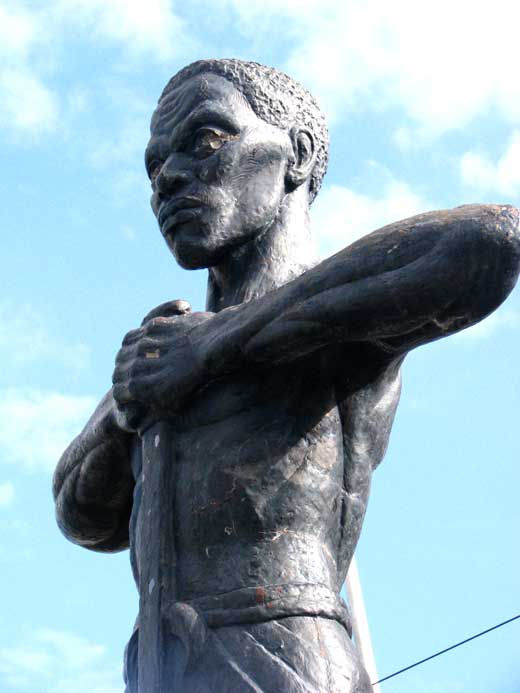
Paul Bogle
# Paul Bogle Paul Bogle (c. 1822 – 1865) was a Jamaican Baptist deacon, political activist, and a towering figure in the fight for social justice in post-emancipation Jamaica. He is most famous for leading the 1865 Morant Bay Rebellion, a pivotal uprising that fundamentally altered the political and social landscape of the island. Living in an era when the formal abolition of slavery had failed to bring true freedom or equality to the Black majority, Bogle dedicated his life to advocating for the impoverished, the disenfranchised, and the oppressed. Today, he is revered as a National Hero of Jamaica, a martyr for civil rights, and an enduring symbol of resistance against systemic injustice. ### Early Life and Post-Emancipation Jamaica Paul Bogle was born around 1822, likely in the parish of St. Thomas-in-the-East, Jamaica. He lived his early years during the twilight of legalized slavery, witnessing the passage of the Emancipation Act in 1834 and the final abolition of the apprenticeship system in 1838. However, the end of slavery did not mean the end of oppression. The white plantocracy—the wealthy owners of the sugar estates—retained strict control over the island's land, economy, and legal system. For the newly freed Black peasants, life was a continuous struggle for survival. Wages on the estates were kept artificially low, and severe droughts and crop failures in the early 1860s brought widespread starvation. Furthermore, the legal system was heavily biased; local magistrates were often plantation owners who used their power to penalize Black workers and evict them from their lands. Politically, the Black majority was completely silenced. The colonial assembly enforced a high poll tax that effectively stripped the right to vote from almost anyone who wasn't a wealthy landowner. It was in this cauldron of misery, exploitation, and disenfranchisement that Paul Bogle emerged as a leader. ### Religious Leadership and Political Awakening Bogle was a successful farmer and a man of some means, owning about 500 acres of land in the rural district of Stony Gut. His true influence, however, stemmed from his role as a deacon in the Native Baptist Church. The Native Baptist movement was independent of the European missionary churches; it integrated African spiritual traditions and became a vital space for community organizing and political discourse among Black Jamaicans. At his chapel in Stony Gut, Bogle preached a gospel of spiritual equality and social justice. He formed a close alliance with [George William Gordon](/profiles/george-william-gordon), a wealthy mixed-race businessman and politician who was one of the few voices in the Jamaican Assembly advocating for the rights of the poor. Gordon recognized Bogle’s leadership qualities and ordained him as a deacon. Together, they organized the people of St. Thomas, urging them to unite and demand fair treatment. ### The Road to Rebellion By 1865, tensions in Jamaica had reached a boiling point. The American Civil War had disrupted trade, driving up the cost of basic goods, while a severe outbreak of cholera and smallpox ravaged the poorest communities. In desperation, the peasants of St. Ann parish drafted a petition to Queen Victoria, begging for access to Crown lands so they could farm and feed their families. The response they received, known as "The Queen's Advice," was entirely devoid of sympathy. Governor [Edward John Eyre](/profiles/edward-john-eyre), a notorious racist who despised the Black population, enthusiastically distributed the decree. The document essentially told the peasants to work harder for the planters and not to expect any handouts. > "Skin for skin, the iron has entered our souls. We have been oppressed for too long, and we must demand our rights. We will march for justice, for we are the children of God, not the slaves of men." > — A sentiment frequently attributed to Paul Bogle during his sermons at Stony Gut. Infuriated by this dismissal, Bogle began organizing secret meetings. In August 1865, he led a deputation of small farmers on a grueling 45-mile march from Stony Gut to the capital, Spanish Town, to meet with Governor Eyre and present their grievances. Eyre blatantly refused to see them. This rejection convinced Bogle that peaceful petitioning within the corrupt colonial system was futile.  ### The Morant Bay Rebellion The spark that ignited the powder keg occurred on October 7, 1865. Bogle and a group of supporters attended a trial at the Morant Bay courthouse. When a Black man was convicted and heavily fined on a trivial charge, a spectator protested. The police attempted to arrest the protester, but Bogle and his men intervened, overpowering the police and freeing the man. Warrants were immediately issued for Bogle's arrest. On October 10, when police arrived at Stony Gut to apprehend him, they were beaten back by the villagers. Knowing that the government would retaliate with brutal force, Bogle decided to take the offensive. On October 11, 1865, Paul Bogle led several hundred men and women, armed with sticks, cutlasses, and a few muskets, into Morant Bay. They marched in military formation to the courthouse where the local vestry was meeting. The confrontation quickly escalated. The volunteer militia panicked and fired into the crowd, killing seven protesters. In response, the enraged crowd rioted. They set fire to the courthouse and surrounding buildings, killing the custos (chief magistrate) and over a dozen other officials and militia members. ### Martial Law and Execution The retaliation from Governor Eyre was swift, merciless, and wildly disproportionate. Eyre declared martial law in the eastern parishes and dispatched heavily armed troops to crush the uprising. Over the next few weeks, soldiers engaged in a campaign of terror, burning over a thousand homes in Stony Gut and surrounding villages. Nearly 500 Black Jamaicans were killed, many of them flogged and executed without trial. Eyre also used the rebellion as a pretext to eliminate his political rival, [George William Gordon](/profiles/george-william-gordon), having him illegally transported to Morant Bay, subjected to a sham trial, and hanged, despite Gordon having no direct involvement in the riot. Paul Bogle retreated into the Blue Mountains but was eventually captured by Maroon forces who were working with the colonial government. He was brought back to Morant Bay, briefly tried by a court-martial, and hanged on October 24, 1865, at the very courthouse he had burned. ### Legacy While Bogle was executed as a traitor, his sacrifice fundamentally changed Jamaica. The sheer brutality of Eyre’s crackdown caused a massive scandal in England, leading to a Royal Commission of Inquiry. Eyre was recalled and dismissed in disgrace. The crisis also forced the Jamaican Assembly to dissolve itself, leading to the imposition of direct Crown Colony rule. While not fully democratic, this transition stripped power from the corrupt local plantocracy and paved the way for crucial social reforms in education, health, and infrastructure. In 1969, Paul Bogle was rightfully recognized as a National Hero of Jamaica. His image has been featured on the two-dollar note and the ten-cent coin. Bogle remains a powerful inspiration, a testament to the fact that when marginalized people stand up against institutional oppression, they can alter the course of history.
View Profile →
Sam Sharpe
### Early Life in the Chains of Slavery Samuel "Sam" Sharpe, affectionately known to his followers as "Daddy Sharpe," was born into the brutal and dehumanizing system of plantation slavery in the parish of St. James, Jamaica, around 1801. Born on a plantation owned by Samuel and Jane Sharpe, his early life was shaped by the harsh realities of the Caribbean sugar economy, a system built on the blood, sweat, and uncompensated labor of African captives and their descendants. The early 19th century in Jamaica was a period of simmering tension. The British abolitionist movement was gaining momentum across the Atlantic, while the local plantocracy desperately clung to their violent, exploitative economic model. Despite being born into bondage, Sharpe possessed a brilliant, inquiring mind and an indomitable spirit. In a society that actively criminalized the education of enslaved people, Sharpe achieved the extraordinary feat of teaching himself to read and write. ### Intellectual Awakening and Literacy Sharpe's literacy was a revolutionary act in itself. It provided him with the key to unlock the intellectual and theological debates of his time. He avidly read local and international newspapers, following the abolitionist debates in the British Parliament. He also immersed himself in the Bible, extracting profound philosophical and moral truths. Sharpe became a devoted member and eventually a deacon at the Burchell Baptist Church in Montego Bay. The Native Baptist movement in Jamaica was unique; it blended orthodox Christian teachings with African spiritual traditions, providing a rare space where enslaved individuals could exercise autonomy and leadership. As a deacon, Sharpe was granted a "ticket" that allowed him to travel between estates to preach. This mobility was crucial. He used his pulpit not just to save souls, but to awaken minds. ### The Historical and Theological Context To truly understand the magnitude of Sam Sharpe's achievements, one must examine the oppressive architecture of Jamaican colonial society in the 1820s and 1830s. The plantocracy operated a regime of terror, utilizing draconian laws to monitor every aspect of an enslaved person's existence. In this panopticon of suffering, the Native Baptist Church emerged as an underground sanctuary. Unlike the established Anglican Church, which was firmly aligned with the interests of the slaveholders and preached subservience, the Native Baptist movement resonated with the visceral spiritual needs of the enslaved. Sharpe’s ascent to the role of a deacon was a testament to his immense charisma and his ability to articulate the collective agony and the deferred dreams of his people. He didn’t merely preach the gospel; he weaponized it against the institution of slavery, pointing out the glaring hypocrisy of a supposedly Christian empire sanctioning the torture of human beings. ### The Ideological Foundation for Freedom Sharpe's theology was fundamentally liberationist. He interpreted the Christian gospel as a mandate for physical and spiritual freedom, preaching that no man had the right to hold another in bondage, as all were equal in the eyes of God. He systematically educated his congregation about the abolitionist efforts in England, convincing many that the British Crown had already granted them freedom, but that the local planters were maliciously withholding it. This belief, though factually premature, provided the ideological fuel for mass mobilization. By late 1831, Sharpe had conceptualized a brilliant and unprecedented strategy: a widespread, organized campaign of passive resistance. > "I would rather die upon yonder gallows than live my life in slavery." ### Strategic Economic Resistance Sharpe’s organizational genius lay in his sophisticated understanding of economics. He recognized that the vast fortunes of the absentee planters in England and the local overseers were entirely dependent on the uninterrupted processing of sugar cane. Sugar cane must be harvested and milled quickly before the sucrose degrades. By timing his proposed strike immediately after the brief respite of the Christmas holidays—the narrow window before the intensive harvest season began—Sharpe aimed to paralyze the economic lifeblood of the colony. It was a masterclass in strategic leverage.  The plan was for the enslaved workers to lay down their tools and refuse to work unless they were officially recognized as free men and paid a fair wage for their labor. Sharpe moved clandestinely from estate to estate in the western parishes, holding secret midnight meetings. He swore his followers to an oath of solidarity on the Bible, demanding strict discipline and non-violence. He believed that if they simply refused to work, the plantation owners would be forced to capitulate without a drop of blood being shed. However, the sheer scale of the mobilization and the deep-seated anger of the enslaved population made the strike impossible to contain as a purely peaceful protest. ### The Baptist War (The Christmas Rebellion) On December 27, 1831, the Kensington Estate in St. James was set ablaze, lighting up the night sky and serving as the undeniable signal that the strike had transformed into a full-scale armed rebellion. This uprising became known as the Baptist War, or the Christmas Rebellion. It was the largest slave revolt in the history of the British Caribbean, eventually involving an estimated 60,000 enslaved people across several parishes. The rebels engaged in guerrilla warfare, burning plantation houses and destroying the infrastructure of the sugar industry. The colonial response was swift, brutal, and overwhelming. The British military, aided by local white militias, ruthlessly crushed the rebellion within a matter of weeks. The retaliation was horrific; hundreds of enslaved people were killed in skirmishes, and hundreds more were subjected to summary executions and brutal floggings without trial. ### Trial, Execution, and Lasting Legacy Sam Sharpe was captured in the aftermath of the rebellion. He was subjected to a show trial and sentenced to death by hanging. On May 23, 1832, he was executed in Montego Bay. While standing on the gallows, he delivered his immortal words, choosing death over continued subjugation. Though the Baptist War was a military defeat, it was a monumental political victory. The sheer scale, organization, and devastation of the rebellion sent shockwaves through London. It unequivocally demonstrated to the British Parliament that the institution of slavery in Jamaica was entirely unsustainable and that the enslaved population would continue to shed blood until they were free.  ### Impact on Emancipation and National Hero Status Less than a year after Sharpe's execution, the British Parliament passed the Slavery Abolition Act of 1833, officially ending the institution of slavery across the British Empire. Sam Sharpe's martyrdom was the catalyst that finally broke the chains of bondage in Jamaica. His legacy is one of unparalleled courage, intellectual brilliance, and moral clarity. In 1982, the Jamaican government rightfully bestowed upon him the Order of National Hero, cementing his status in the pantheon of figures like [Nanny of the Maroons](/profiles/nanny-of-the-maroons) and [Paul Bogle](/profiles/paul-bogle). Today, his face adorns the Jamaican $50 banknote, and the site of his execution is now known as Sam Sharpe Square, a permanent monument to the man who laid down his life so that a nation could be free.
View Profile →