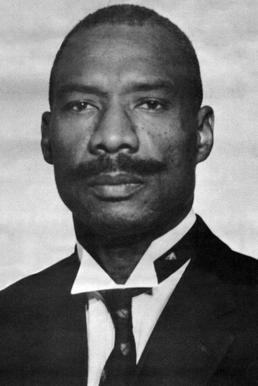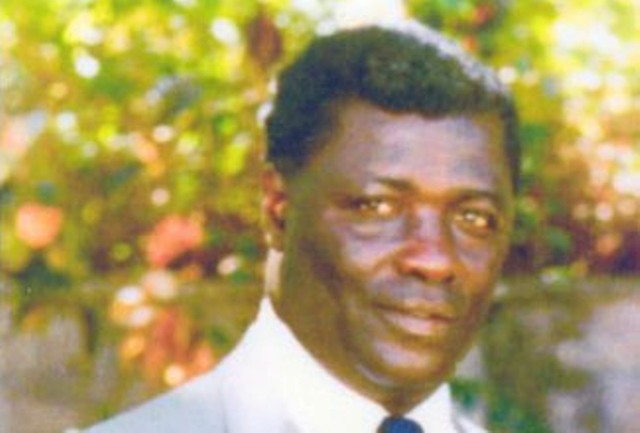
Simeon Daniel

Simeon Daniel
Biography
Sir Simeon Daniel: The Father of Modern Nevis
Sir Simeon Daniel stands as a colossal figure in the political and social history of the Caribbean, forever enshrined in the annals of Saint Kitts and Nevis as the "Father of Modern Nevis" and the island's first Premier. Born into an era where Nevis was largely treated as a neglected dependency within a larger administrative grouping, Daniel dedicated his life, his intellect, and his political acumen to the empowerment of his fellow Nevisians. Through his founding of the Nevis Reformation Party (NRP), his brilliant legal maneuvering during the drafting of the independence constitution, and his transformative tenure as Premier, Daniel did not merely lead a government; he fundamentally built a modern society.
His journey from a humble village on the slopes of Nevis Peak to the highest echelons of government is a testament to his resilience, his unwavering belief in the potential of his people, and his unyielding commitment to self-determination.
Early Life and the Roots of Resilience
Simeon Daniel was born on August 22, 1934, in the small, tight-knit community of Barnes Ghaut Village in the St. Thomas Lowland Parish of Nevis. He was the son of Joseph and Melvina Daniel, who were hardworking farmers. In the 1930s, Nevis was deeply entrenched in an agrarian economy, still bearing the socio-economic scars of the colonial plantation system. Opportunities for upward mobility were scarce, and the daily reality for most Nevisians was one of subsistence and hard labor.
Daniel received his early education at the St. Thomas’ Government Elementary School. It was here that his intellectual curiosity and natural aptitude for leadership began to surface. Recognizing the limited options available on the island, he gravitated toward education as a means of advancement. In 1950, at the age of sixteen, he began his professional life as a pupil teacher, a common route for bright young Caribbean men and women of that era. Dedicated to his craft, he pursued formal teaching qualifications and successfully earned his Leeward Islands Teachers' Certificate in 1957.
During his time as an educator, Daniel witnessed firsthand the systemic inequalities that plagued the education system and the broader society in Nevis. The island was part of the St. Kitts-Nevis-Anguilla colony, and political and economic power was heavily centralized in Basseterre, St. Kitts. Nevis often received the proverbial "crumbs from the master's table," suffering from inadequate infrastructure, poor healthcare facilities, and limited economic investment. This early exposure to the stark realities of Nevisian marginalization planted the seeds of his future political advocacy.
A Journey for Justice: Legal Studies in England
Seeking to equip himself with the tools necessary to effect real change, Daniel made the difficult decision to leave his homeland. In 1962, part of the Windrush generation's broader wave of Caribbean migration, he traveled to England. However, unlike many who went solely for economic reasons, Daniel went with a specific purpose: to study law.
While in London, he supported himself by working at the London County Council. The experience of working in a massive administrative bureaucracy provided him with invaluable insights into public administration, governance, and organizational structure—skills that would later prove crucial in his political career. He balanced his demanding job with rigorous legal studies, demonstrating a formidable work ethic.
His perseverance paid off when he was called to the Bar at the Inner Temple in 1966. Now a qualified barrister, Daniel could have chosen to remain in the United Kingdom or pursue a lucrative private practice elsewhere. Instead, driven by a deep-seated obligation to his homeland, he returned to the Caribbean.
The Return and the Birth of a Political Movement
Upon his return, Daniel initially served in the civil service, working as Crown Counsel and later as Registrar of the Supreme Court. These roles allowed him to intimately understand the legal and administrative framework of the colony. He eventually transitioned into private practice, becoming a respected legal mind in the region.
However, the political climate in St. Kitts and Nevis was growing increasingly volatile. The central government, dominated by the Labour Party and led by the formidable Robert Llewellyn Bradshaw, was deeply focused on the sugar industry in St. Kitts. Nevis, which did not have a large-scale sugar industry, felt increasingly alienated. The breaking point for many Nevisians came when Anguilla successfully rebelled against the central government in 1967, citing similar grievances of neglect and marginalization.
Inspired by a desire to prevent Nevis from suffering a similar fate of perpetual neglect, and recognizing that systemic change required organized political action, Simeon Daniel and a group of like-minded patriots took a historic step. On August 1, 1970, they founded the Nevis Reformation Party (NRP).
The NRP was not just a political party; it was a movement for Nevisian dignity and self-determination. Under Daniel's leadership, the party’s platform was crystal clear: an end to the secondary status of Nevis, a demand for equitable resource distribution, and the pursuit of political autonomy. Daniel’s legal expertise, combined with his calm demeanor and strategic brilliance, made him the undisputed leader of this new political force.
"The destiny of Nevis must be placed firmly in the hands of Nevisians. We can no longer afford to be an afterthought in our own country; we must be the architects of our own future."
The Architect of Autonomy
The 1970s saw the NRP steadily gain ground, consistently winning the Nevisian seats in national elections. Daniel became the voice of Nevis in the National Assembly, constantly challenging the status quo.
The political landscape shifted dramatically in 1980. The long-ruling Labour Party lost its absolute majority. Seizing this unprecedented opportunity, Simeon Daniel led the NRP into a historic coalition government with the People's Action Movement (PAM) of St. Kitts, led by Dr. Kennedy Simmonds. In this new administration, Daniel was appointed Minister of Finance and Nevis Affairs. For the first time, a Nevisian held control of the nation's purse strings, and Daniel used this position to begin directing much-needed resources back to his island.
As the federation moved toward full independence from Britain in 1983, Daniel played his most crucial role. He was a primary architect of the new constitution. He understood that true empowerment for Nevis required structural, constitutional guarantees, not just temporary political alliances.
Daniel fiercely negotiated the inclusion of Chapter X in the Independence Constitution, which established the Nevis Island Administration (NIA) and the Nevis Island Assembly, granting the island substantial self-government. Even more significantly, he secured Section 113, a unique constitutional provision that granted Nevis the right to secede from the federation and become an independent nation if a two-thirds majority of its citizens voted to do so. This "escape clause" was a masterstroke of political negotiation, ensuring that Nevis would never again be held hostage against its will.
The First Premier: Building Modern Nevis
On September 19, 1983, Saint Kitts and Nevis gained independence. On that same day, Simeon Daniel was sworn in as the first Premier of Nevis. He inherited an island that was woefully underdeveloped. There was no reliable electricity, roads were in disrepair, the education system was lacking, and the economy was stagnant.
Daniel tackled these challenges with the vision of a state-builder. He immediately set about modernizing the island's infrastructure. He expanded the electricity grid, ensuring that power reached all corners of the island. He initiated comprehensive road-building programs, connecting communities and facilitating commerce. He heavily invested in education, recognizing it as the great equalizer, and established new schools and scholarships for Nevisian youth.
Perhaps his most enduring legacy as Premier was his economic vision. In 1985, he championed the establishment of the Bank of Nevis Ltd.
"We must have our own financial institution, a bank rooted in the soil of Nevis, committed to the dreams and enterprises of Nevisians."
The Bank of Nevis provided crucial access to capital for local businesses and homeowners, stimulating local economic growth. Furthermore, Daniel recognized that Nevis needed a distinct economic engine. He aggressively pursued foreign investment in high-end tourism, culminating in the opening of the prestigious Four Seasons Resort Nevis in 1991. This development completely transformed the Nevisian economy, shifting it from a struggling agricultural base to a premier tourism destination, creating thousands of jobs and generating significant revenue.
Later Life and Enduring Legacy
Sir Simeon Daniel served as Premier until 1992, when the NRP was defeated in local elections. He accepted the democratic will of the people with characteristic grace and retired from active politics, returning to his legal practice. He spent his later years as an elder statesman, universally respected across the political divide for his monumental contributions to the island.
He passed away on May 27, 2012, at the age of 77. His death was mourned not just in Nevis, but across the entire federation. He was laid to rest with full military honors, a fitting tribute to a man who had fought so valiantly for his people.
In September 2013, the Federation of Saint Kitts and Nevis posthumously awarded him the Order of National Hero, the nation's highest honor, permanently cementing his place in the pantheon of great Caribbean leaders. Today, his legacy lives on in the very fabric of modern Nevis—in its roads, its schools, its thriving economy, and in the profound sense of pride and autonomy shared by all Nevisians. The Dr. Sir Simeon Daniel Museum at Belmont Gardens stands as a testament to his life's work, ensuring that future generations will always remember the visionary who laid the foundation for the Nevis they inherit.
Major Contributions
- Sir Simeon Daniel’s primary contribution to the Caribbean was his successful orchestration of Nevisian autonomy and the subsequent modernization of the island's economy and infrastructure.
- As a founding father of the Nevis Reformation Party (NRP) and a primary architect of the 1983 Independence Constitution, he secured the establishment of the Nevis Island Administration and the unique constitutional right for Nevis to secede (Section 113), ensuring the island's self-determination and protecting it from systemic marginalization.
- Beyond his political and constitutional achievements, Daniel is rightfully hailed as the "Father of Modern Nevis" for his visionary economic and social policies during his tenure as the first Premier (1983–1992).
- He transformed the island's landscape by modernizing electricity and road networks, investing heavily in education, establishing the Bank of Nevis in 1985 to provide local financial empowerment, and pioneering the island’s shift toward luxury tourism with the commissioning of the Four Seasons Resort.
- His leadership laid the enduring institutional and economic foundations upon which contemporary Nevis continues to thrive.