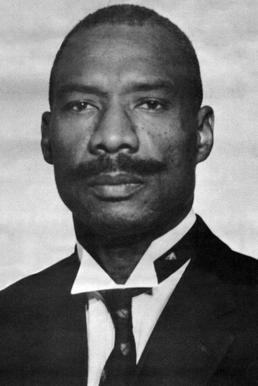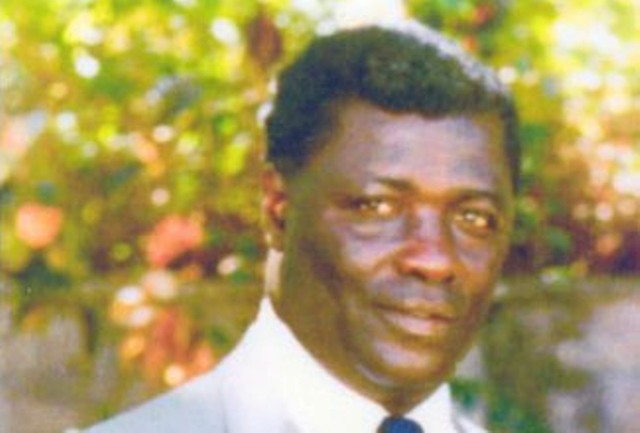
Sir Simeon Daniel

Sir Simeon Daniel
Biography
Introduction
The Right Excellent Sir Simeon Daniel (August 22, 1934 – May 27, 2012) stands as one of the most transformative figures in the modern history of the Caribbean. Revered today as the "Father of Modern Nevis," he was a pivotal statesman, a brilliant legal mind, and the first Premier of the island of Nevis. As a founding member of the Nevis Reformation Party (NRP) in 1970, Sir Simeon fundamentally altered the political dynamics of the Federation of St. Kitts and Nevis. His visionary leadership navigated Nevis through the treacherous waters of post-colonial development, securing unprecedented constitutional autonomy and laying the economic foundation that transformed the island from a neglected agrarian outpost into a thriving, modern society.
Early Life and Education
Simeon Daniel was born on August 22, 1934, in the modest and tight-knit community of Barnes Ghaut Village in the St. Thomas Lowland Parish of Nevis. Born to Joseph and Melvina Daniel, his early years were characterized by the traditional rural Nevisian life, which was deeply reliant on agriculture and local commerce. Growing up in a period where educational and economic opportunities in the Leeward Islands were severely limited, Daniel demonstrated an early and insatiable appetite for learning.
He began his professional life in the classroom, taking a position as a pupil-teacher in 1950 at the young age of 16. Teaching in local Nevisian schools, he developed a profound understanding of the social inequalities and infrastructural deficits that plagued his island. In 1957, his dedication to the teaching profession was recognized when he earned the prestigious Leeward Islands Teachers’ Certificate. His time as an educator solidified his belief that human capital development was the ultimate key to escaping the cycle of poverty—a philosophy that would later become the bedrock of his political administration.
Legal Career and Return to the Caribbean
Though he was a passionate educator, Daniel recognized that affecting systemic change required an understanding of the law and political structures. In the early 1960s, he made the monumental decision to travel to England to pursue a legal education, joining a generation of West Indian intellectuals who sought professional training in the mother country to prepare for the eventual self-governance of their home islands.
He enrolled at the Council of Legal Education in London and was admitted to the prestigious Inner Temple. In 1966, he was officially called to the Bar as a Barrister-at-Law. Daniel returned to the Caribbean equipped not only with a formidable legal education but also with a global perspective on governance, civil rights, and constitutional law. After working briefly as a Crown Counsel and later in the magistracy in the region, he established private practice in Nevis. He founded the esteemed law firm Daniel, Brantley & Associates, which remains one of the premier legal institutions in the Federation today. Through his legal practice, he frequently defended the rights of ordinary Nevisians, building a reputation as a champion of the people.
The Nevis Reformation Party and the Fight for Autonomy
The political climate of the late 1960s and early 1970s in the associated state of St. Kitts-Nevis-Anguilla was highly volatile. Following the Anguillan Revolution of 1967, where Anguilla successfully rebelled against central rule from St. Kitts, sentiments of neglect and marginalization began to boil over in Nevis. Many Nevisians felt sidelined by the central government led by Robert Llewellyn Bradshaw, perceiving a stark inequity in the distribution of resources, infrastructure, and political power.
"Through the establishment of the Nevis Reformation Party, Daniel gave voice to a generation of Nevisians who felt sidelined, transforming the political landscape of the entire Federation."
In 1970, Simeon Daniel channeled this collective frustration into organized political action. Alongside other prominent Nevisian figures, he co-founded the Nevis Reformation Party (NRP). The party's mandate was unambiguous: to advocate for the rights of the Nevisian people, demand equitable socio-economic development, and, if necessary, seek outright secession from St. Kitts. As the face and intellectual engine of the NRP, Daniel spent the 1970s galvanizing the Nevisian electorate. He served as Chairman of the Nevis Local Council from 1972 to 1980, effectively becoming the island's most powerful local advocate.
First Premier of Nevis and National Independence
The turning point in Sir Simeon’s political career—and in the history of the Federation—came following the 1980 national elections. The NRP won the two Nevis seats in the National Assembly and suddenly found themselves holding the balance of power. In a masterstroke of political pragmatism, Daniel formed a coalition government with the People's Action Movement (PAM), led by Kennedy Simmonds of St. Kitts. This coalition ended nearly thirty continuous years of rule by the Labour Party.
In the new national government, Simeon Daniel was appointed Minister of Finance and Nevis Affairs. Leveraging his powerful position, he championed the constitutional negotiations leading up to the Federation's independence from Great Britain. Daniel was the principal architect of the unique federal structure enshrined in the 1983 Independence Constitution. He secured unparalleled autonomy for Nevis, known as "Home Rule," and successfully negotiated the inclusion of Section 113—a constitutional clause granting Nevis the right to secede from the Federation if approved by a two-thirds majority in a referendum.
When St. Kitts and Nevis achieved full independence on September 19, 1983, Sir Simeon Daniel was sworn in as the very first Premier of Nevis, leading the newly established Nevis Island Administration (NIA).
The "Father of Modern Nevis": Economic and Social Modernization
Sir Simeon’s tenure as Premier (1983–1992) is widely regarded as the golden era of Nevisian development. Before his administration, Nevis severely lacked basic infrastructure; large parts of the island were without reliable electricity, paved roads, or running water. Daniel set out to rapidly modernize the island.
Economic Vision and the Bank of Nevis
Understanding that political autonomy was meaningless without economic independence, Daniel spearheaded the creation of indigenous financial institutions. In 1985, he founded the Bank of Nevis Ltd., operating under the motto "Improving the Quality of Life." This was a revolutionary step that democratized access to capital, allowing ordinary Nevisians to secure mortgages, build homes, and launch local businesses without relying on foreign-owned banks.
Tourism and the Four Seasons Resort
Perhaps his most visible economic triumph was the attraction of foreign direct investment to build a high-end tourism product. Daniel was instrumental in courting international developers to establish the Four Seasons Resort Nevis, which opened in 1991. This single project fundamentally shifted the Nevisian economy away from its declining agricultural base (sugar and sea island cotton) toward luxury tourism and services. The resort brought unprecedented employment, infrastructural upgrades, and global prestige to the island.
"Simeon Daniel was a visionary who recognized that true autonomy for Nevis required not just political home rule, but an economic foundation built on local ownership, education, and modern infrastructure."
Infrastructure, Land Reform, and Education
Beyond banking and tourism, Daniel implemented a sweeping Land Reform Programme. By purchasing failing estate lands and redistributing them, he ensured that ordinary Nevisians could own the land their ancestors had worked for generations.
Remembering his roots as a teacher, he radically expanded the island's educational system. His administration established the first government-run pre-schools and constructed the Nevis Sixth Form College, allowing students to complete their advanced-level education without having to move to St. Kitts or abroad. Concurrently, he modernized the island's physical infrastructure, laying down a comprehensive network of paved roads, expanding the airport, and upgrading water and electrical grids.
Later Life and Legacy
Sir Simeon Daniel retired from active electoral politics in 1992, returning to his private law practice and his family life with his wife, Lady Sheila Daniel, and their children. He transitioned into the role of an elder statesman, universally respected across partisan lines for his profound contributions to nation-building. He passed away on May 27, 2012, at the age of 77.
In recognition of his monumental life's work, the Federation of St. Kitts and Nevis posthumously awarded him the Order of National Hero on September 16, 2013, the highest honor in the nation. To ensure his legacy is never forgotten, the Sir Simeon Daniel Museum was established at Pinney's Estate in Nevis, preserving the history of a man who dedicated his life to the empowerment and modernization of his island.
Conclusion
Sir Simeon Daniel’s legacy is inextricably woven into the fabric of modern Nevis. He took the reins of leadership when Nevis was an overlooked territory and transformed it into a self-governing, economically viable, and proud society. His brilliance lay not just in his legal and political maneuvering, but in his deep, unyielding belief in the potential of the Nevisian people.
Major Contributions
- Sir Simeon Daniel fundamentally altered the political and economic landscape of St. Kitts and Nevis.
- As the lead negotiator for Nevis during the 1983 independence talks, he engineered a unique federal constitution that granted Nevis "Home Rule" and established the Nevis Island Administration, effectively giving the island self-governance and the constitutional right to secession.
- Economically, he is heralded as the "Father of Modern Nevis" for transitioning the island's economy from a struggling agricultural base to a modern service and tourism hub.
- He achieved this through landmark initiatives such as the establishment of the Bank of Nevis in 1985 to democratize local capital, the introduction of sweeping land reform for local ownership, and the successful development of the Four Seasons Resort in 1991, which became the economic engine of the island.
- His foundational investments in infrastructure and education (including the Nevis Sixth Form College) permanently elevated the standard of living for all Nevisians.