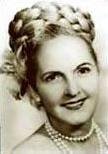
Julia de Burgos

Julia de Burgos
Biography
Julia Constanza Burgos García, known universally as Julia de Burgos, stands as a titan of Caribbean literature and one of the most brilliant, uncompromising poets of the twentieth century. Born on February 17, 1914, in the barrio of Santa Cruz in Carolina, Puerto Rico, she emerged from crushing poverty to become a foundational figure in Latin American poetry, a fierce advocate for Puerto Rican independence, and a trailblazing feminist. Her legacy, far from being confined to the written word, is intimately woven into the complex history of the Puerto Rican diaspora, colonial resistance, and the early articulation of Afro-Caribbean and intersectional feminist identity.
Early Life and the Crucible of Poverty
The eldest of thirteen children born to Francisco Burgos Hance, a farmer and member of the National Guard, and Paula García de Burgos, Julia’s early life was marked by both the natural beauty of the island and the brutal realities of economic deprivation. The rural landscape of Carolina left an indelible mark on her imagination, providing the ecological imagery that would later define much of her poetic output. However, this idyllic environment was sharply contrasted by immense hardship. Tragically, six of her younger siblings succumbed to malnutrition and preventable diseases during childhood. This early encounter with mortality and the systemic inequalities of a colonized Puerto Rico profoundly shaped her worldview, instilling in her a lifelong commitment to social justice and the defense of the marginalized.
Despite the formidable obstacles posed by poverty, de Burgos demonstrated an exceptional intellect and an insatiable hunger for learning. Recognizing her potential, her family pooled their meager resources to ensure she received an education. She attended elementary school in Carolina, where her academic brilliance quickly became apparent. By the age of fourteen, her talents earned her a scholarship to the prestigious University High School at the University of Puerto Rico (UPR) in Río Piedras.
Education and the Formation of an Intellectual
Entering the University of Puerto Rico in 1931 was a transformative experience for the young scholar. At UPR, de Burgos was exposed to a vibrant intellectual milieu teeming with anti-colonial sentiment and literary innovation. She immersed herself in the study of literature, philosophy, and history, refining the poetic voice that was already beginning to stir within her. In 1933, at the age of just nineteen, she completed her studies and earned her teaching certificate.
Following graduation, she accepted a teaching position in the rural municipality of Naranjito. It was here, surrounded by the dramatic topography of the island's interior, that she found profound inspiration. The nearby Río Grande de Loíza became the subject of one of her most famous and revered poems. In "Río Grande de Loíza," the river ceases to be merely a body of water; it transforms into a potent metaphor for the Puerto Rican soul—a repository of the island's pain, its African heritage, and its enduring strength. The poem also reflects her burgeoning awareness of the deep scars left by slavery and colonialism, establishing her as an early voice of Afro-Antillean pride.
A Voice for Independence: The Puerto Rican Nationalist Party
The 1930s in Puerto Rico were characterized by intense political upheaval, economic depression, and violent clashes between the U.S.-appointed colonial government and the Puerto Rican Nationalist Party, led by Pedro Albizu Campos. De Burgos was deeply radicalized by these events. Refusing to remain a passive observer, she threw herself into the struggle for national liberation.
She became the Secretary General of the Hijas de la Libertad (Daughters of Freedom), the women's branch of the Nationalist Party. Her activism was not confined to organizing; she used her pen as a weapon, writing fiery essays and delivering speeches that championed independence and condemned U.S. imperialism. Her political convictions were inseparable from her poetry. For de Burgos, the liberation of the Puerto Rican nation was intimately connected to the liberation of the Puerto Rican woman.
The Feminist Poetics of Julia de Burgos
Julia de Burgos’s poetry was revolutionary in its fierce rejection of the patriarchal constraints of her era. In a deeply conservative, Catholic society that expected women to be docile, domestic, and subservient, de Burgos demanded absolute autonomy over her body, her intellect, and her destiny.
"I am life, strength, woman. I am the route of all my own liberation." — From "Yo misma fui mi ruta" (I Was My Own Route)
Her iconic poem, "Yo misma fui mi ruta," is a manifesto of self-emancipation. In it, she dismantles the traditional roles assigned to women, declaring herself the architect of her own path. She challenged the dual standards of morality and dared to write openly about female desire, romantic passion, and emotional turmoil. Her first two collections, Poema en veinte surcos (1938) and Canción de la verdad sencilla (1939), established her as a literary force, though her unapologetic boldness often alienated the conservative literary establishment of the island.
Migration, Love, and Exile: The New York and Havana Years
Seeking a broader intellectual horizon and fleeing the stifling social mores of Puerto Rico, de Burgos migrated to New York City in 1940. This move was partly motivated by her intense and tumultuous romance with Juan Isidro Jimenes Grullón, a Dominican physician and political exile. The couple soon relocated to Havana, Cuba, a city that was then a vibrant hub of Latin American arts and revolutionary politics. In Havana, de Burgos enrolled at the University of Havana, mingled with prominent intellectuals, and experienced a period of profound creative fertility.
However, her relationship with Jimenes Grullón was fraught with difficulties. His aristocratic family reportedly rejected her due to her Afro-Caribbean ancestry and her lack of wealth. The eventual dissolution of their relationship was a devastating blow that triggered a deep depression. Heartbroken, she left Cuba in 1942 and returned to New York City alone.
The Final Years: Struggle in El Barrio
De Burgos’s return to New York marked the beginning of a tragic decline. While she found work as a journalist for Pueblos Hispanos, a progressive Spanish-language newspaper, she struggled to survive in a city that was often deeply hostile to Puerto Rican migrants. She faced the dual burdens of racism and sexism, and her economic situation became increasingly desperate.
During this period, she wrote some of her most haunting and melancholic poetry, reflecting the alienation, displacement, and existential despair of the migrant experience. She turned to alcohol to numb the pain of her broken heart, her poverty, and her physical ailments, which included cirrhosis of the liver. Despite her profound suffering, her creative spirit endured, resulting in the poems that would later be collected in her posthumous volume, El mar y tú: otros poemas (1954).
Tragedy and Posthumous Legacy
The conclusion of Julia de Burgos’s life is one of the most heartbreaking chapters in literary history. On July 6, 1953, at the age of just thirty-nine, she collapsed on a sidewalk in East Harlem (El Barrio). Because she carried no identification, she was taken to a hospital where she passed away shortly after. Her body was transported to the city morgue and, remaining unclaimed, she was buried in a pauper’s grave on Hart Island under the name "Jane Doe."
It was only through the tireless efforts of her friends and colleagues that her identity was eventually discovered. Her remains were exhumed and repatriated to Puerto Rico. In stark contrast to her lonely death, her return to the island was met with a hero's welcome. She was given a state funeral in her hometown of Carolina, honored as a martyr of the national culture.
Today, Julia de Burgos is celebrated not just as a brilliant poet, but as a cultural icon and a fierce ancestor to the Nuyorican poetry movement that flourished in the 1970s. Writers like Pedro Pietri and Giannina Braschi stand on the foundation she built. Her insistence on naming her intersecting identities—as a woman, a Puerto Rican, a person of African descent, and an anti-colonial subject—makes her work remarkably contemporary. Through her immortal verses, she transcended the tragedy of her final days, ensuring that her voice would echo across generations as a testament to the enduring power of the human spirit.
Major Contributions
- Julia de Burgos profoundly reshaped Latin American and Caribbean literature by introducing a radically feminist and anti-colonial voice into the mid-twentieth-century poetic canon.
- Her seminal works, such as *Poema en veinte surcos* and the posthumous *El mar y tú*, challenged patriarchal norms, demanded female autonomy, and elevated the Afro-Antillean experience, laying the intellectual groundwork for intersectional feminism in the region.
- By merging intimate personal lyricism with fierce political critique, she redefined what it meant to be a woman writing in the Spanish language.
- Beyond her literary achievements, de Burgos was a dedicated activist whose work as Secretary General of the Daughters of Freedom bolstered the Puerto Rican Nationalist movement.
- As a migrant to New York, her poignant writings on exile, identity, and displacement made her a foundational precursor to the Nuyorican literary movement.
- Today, she is immortalized as a cultural hero whose legacy continues to inspire diaspora communities, feminist scholars, and advocates for social justice across the Americas.