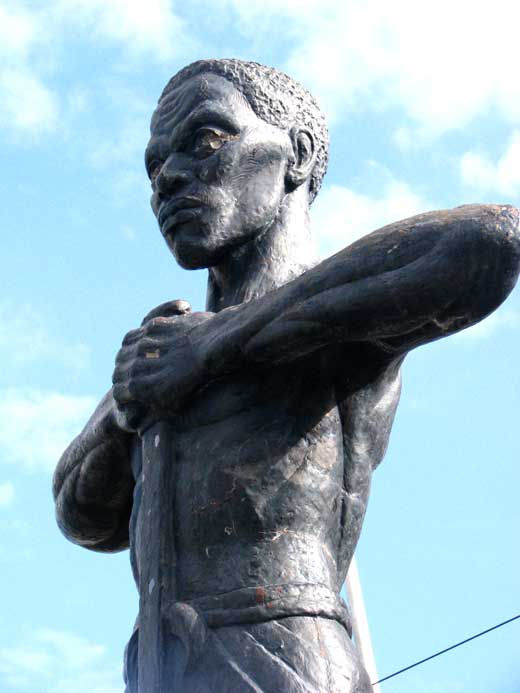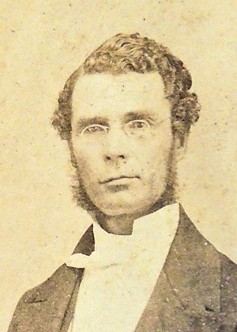
George William Gordon

George William Gordon
Biography
Introduction: The Martyr of Morant Bay
George William Gordon stands as one of the most towering and sacrificial figures in the history of Jamaica and the broader Caribbean. Proclaimed a National Hero of Jamaica in 1969 alongside his political ally Paul Bogle, Gordon was a wealthy biracial landowner, magistrate, business magnate, and member of the Jamaican House of Assembly who defied the prejudices of his class to become the uncompromising champion of the impoverished black peasantry. Operating in the tumultuous post-emancipation era of the mid-19th century, Gordon waged a relentless political and constitutional battle against colonial corruption, judicial oppression, and systemic racism. His struggle reached a tragic and defining climax during the 1865 Morant Bay Rebellion, culminating in his illegal martial law execution ordered by Governor Edward Eyre. Gordon’s martyrdom shocked the British Empire, dismantled centuries of planter-controlled oligarchic governance, and laid the cornerstone for modern Jamaican democracy and racial justice.
Early Life and Rise to Wealth
George William Gordon was born into slavery around 1820 on the Cherry Garden Estate in the parish of St. Andrew, near Kingston. He was the second of eight children born to Joseph Gordon, a wealthy aristocratic Scottish planter and attorney who managed numerous sugar estates across Jamaica, and Ann Rattray, an enslaved black woman on his plantation. Born into the complex socio-racial hierarchy of colonial Jamaica, the young George was largely neglected by his father during his early childhood and received little formal schooling. However, possessing exceptional intelligence, remarkable drive, and an insatiable appetite for learning, Gordon taught himself reading, writing, mathematics, and commercial accounting.
At the age of ten, Gordon was sent to school in Jamaica and subsequently entered the commercial houses of Kingston as a clerk. Demonstrating extraordinary business acumen, he established his own produce and timber merchant business by his late teens. By his mid-twenties, Gordon had amassed an immense personal fortune. He expanded his empire aggressively, investing heavily in urban real estate, agricultural shipping, and rural plantations across Jamaica. In a remarkable turn of historical irony, when his white father Joseph Gordon fell into severe financial ruin during the economic downturn following the abolition of slavery in 1834, it was George William Gordon who paid off his father's vast debts and purchased the very Cherry Garden Estate where his mother had once been enslaved. Despite achieving admission into the highest echelons of Jamaican economic elite, Gordon refused to adopt the callous attitudes of the white plantocracy, remaining deeply empathetic to the struggles of the newly emancipated black masses.
Political Awakening and Religious Conversion
During the 1840s and 1850s, Gordon underwent a profound spiritual and political transformation. Disillusionment with the hypocrisy and moral bankruptcy of the Anglican church—which served primarily as the ideological defender of the white planter class—led Gordon to convert to the Native Baptist faith. He was deeply influenced by the egalitarian teachings of radical missionary abolitionists such as William Knibb and the revolutionary memory of National Hero Sam Sharpe, who had led the 1831 Christmas Rebellion. Gordon established independent Baptist chapels across the island, preaching a gospel of spiritual liberation, racial equality, and self-reliance. It was during his religious organizing in the eastern parish of St. Thomas-in-the-East that Gordon discovered a passionate local deacon named Paul Bogle, ordaining him and establishing a lifelong political and spiritual alliance.
In 1850, Gordon entered colonial politics, winning election to the Jamaican House of Assembly as the representative for St. Thomas-in-the-East. He also served as a Justice of the Peace and a parish magistrate. In the Assembly, Gordon formed the backbone of the small "Town Party" opposition, consistently voting against measures intended to tax the peasantry and restrict their voting rights. He used his platform to expose corrupt public officials, condemn the deplorable conditions of colonial prisons and poor-houses, and fight for public education and healthcare for the black working class.
Champion of the Peasantry and Clash with Governor Eyre
By the early 1860s, Jamaica had plunged into an acute socio-economic crisis. A succession of devastating droughts destroyed local subsistence crops, while the American Civil War disrupted international trade, causing the cost of imported foodstuffs and basic textiles to skyrocket. Simultaneously, the planter-controlled Assembly enacted regressive taxation that fell heavily on poor smallholders while exempting plantation owners. Worse still, the colonial judicial system was entirely controlled by planter-magistrates who routinely evicted black peasants from ancestral lands and denied them fair wages.
George William Gordon became the most vocal and fearless critic of this oppressive system. His fiery advocacy brought him into direct, bitter conflict with Governor Edward Eyre, an autocratic colonial administrator who despised black advancement and viewed any dissent as sedition. When Gordon publicly exposed a white magistrate for locking a poor black man in an outhouse without food or water, Governor Eyre retaliated by arbitrarily stripping Gordon of his commission as a Justice of the Peace and removing him from the St. Thomas vestry. Undeterred, Gordon purchased even more land in the parish, subdivided it into affordable plots, and sold them to black peasants to help them meet the property qualifications required to vote.
"I feel it my duty to stand up for the poor and oppressed of this land. If Governor Eyre continues his course of despotic tyranny, the grievances of the people will burst forth in an avalanche that no colonial bayonet can restrain." — George William Gordon, public address on Jamaican conditions
The Undercurrents of Rebellion (1864–1865)
Tensions reached a boiling point in 1865 following the "Underhill Letter" controversy. Dr. Edward Underhill, secretary of the Baptist Missionary Society in Great Britain, wrote a letter to the British Colonial Office detailing the extreme starvation and suffering of the Jamaican peasantry. Governor Eyre dismissed the report as slander, prompting Gordon to organize a series of massive public protests across the island known as the "Underhill Meetings". Gordon chaired the largest meeting in Kingston, drafting resolutions demanding immediate royal intervention and agrarian reform.
In response to the peasants' petitions, Queen Victoria’s government issued the infamous "Queen’s Advice," a callous document distributed by Governor Eyre which told impoverished black Jamaicans that their poverty was due to laziness and advised them to work harder for planter wages rather than seek government relief. The publication of the Queen’s Advice provoked indignation and despair across the island. In St. Thomas-in-the-East, Gordon counseled Paul Bogle and local laborers to organize peaceful deputations to demand justice before the courts, warning the colonial administration that the people's patience was exhausted.
The Morant Bay Rebellion and Arrest
On October 11, 1865, Paul Bogle led a protest march of hundreds of peasants to the Morant Bay Courthouse to protest unjust arrests and land evictions. Confronted by the local volunteer militia, stones were thrown, and the militia fired directly into the crowd, killing several protesters. A chaotic riot ensued; the courthouse was burned to the ground, eighteen officials and militiamen were killed, and open insurrection spread across the parish. Governor Edward Eyre immediately declared martial law across the eastern parishes and dispatched British warships and troops to crush the uprising with ruthless brutality.
At the time of the rebellion, George William Gordon was residing far away at his home in Kingston, a city where civil law remained strictly in effect and martial law had not been proclaimed. Gordon had took no part in the violence and had consistently advocated for constitutional, political solutions. However, Governor Eyre saw the rebellion as the perfect opportunity to eliminate his most formidable political nemesis. On October 17, Eyre issued a warrant for Gordon’s arrest. Hearing of the warrant, Gordon demonstrated his absolute belief in the rule of law and his own innocence by voluntarily walking into military headquarters in Kingston to turn himself in.
Illegal Trial, Execution, and National Heroism
Knowing that no civil court in Kingston could possibly convict Gordon of treason without evidence, Governor Eyre personally supervised Gordon's forcible capture and abduction. Eyre ordered Gordon stripped, put in irons, and loaded aboard the warship HMS Wolverine. He was illegally transported from Kingston—where martial law did not exist—directly into the martial law zone of Morant Bay to face a military tribunal.
On October 21, 1865, Gordon was subjected to a mock court-martial presided over by young, inexperienced British naval officers. He was denied legal counsel, denied the right to call defense witnesses, and confronted with forged documents and hearsay evidence obtained from terrified prisoners under torture. Despite conducting a brilliant self-defense that dismantled the prosecution's case, Gordon was found guilty of high treason and sedition and sentenced to death by hanging. On the eve of his execution, confined in a darkened cell, Gordon wrote a heartbreaking yet majestic farewell letter to his beloved wife, Lucy Gordon.
"I did not expect that, not being a rebel, I should have been tried and condemned in this way. I never advised or took part in any rebellion... I die peacefully, believing that the cause of justice and truth will ultimately prevail." — Excerpt from George William Gordon's last letter to his wife, Lucy Gordon, October 1865
On the morning of October 23, 1865, George William Gordon was hanged from the arched ruins of the burnt Morant Bay Courthouse alongside eighteen other Jamaicans. His body was left hanging for twenty-four hours before being thrown into a mass trench. Days later, his comrade Paul Bogle executed at the exact same spot.
Gordon’s illegal execution unleashed a tempest of political outrage in Great Britain. Liberal intellectuals, philosophers, and scientists—led by John Stuart Mill, Charles Darwin, and Thomas Huxley—formed the Jamaica Committee, demanding Governor Eyre be tried for murder. Although Eyre narrowly escaped prison, he was disgraced and dismissed from office. The scandal forced the British Crown to abolish Jamaica's centuries-old planter Assembly and institute Direct Crown Colony governance, implementing sweeping judicial and medical reforms that Gordon had championed for decades.
In 1969, the independent Government of Jamaica officially proclaimed George William Gordon a National Hero of Jamaica alongside Paul Bogle, Marcus Garvey, Norman Manley, and Alexander Bustamante. Today, the meeting place of the Jamaican Parliament in Kingston is proudly named Gordon House in his permanent honor. His visage graces Jamaican currency, and his legacy stands as an immortal testament to the principle that righteous resistance against tyranny is the highest duty of a citizen.
Major Contributions
- George William Gordon made a monumental contribution to the political, economic, and constitutional development of Jamaica by transforming colonial parliamentary politics into a weapon for social justice.
- As a wealthy landowner and magistrate, he uniquely bridged the gap between the privileged elite and the disenfranchised masses, utilizing his wealth to purchase and subdivide lands for black peasants.
- This strategic agrarian support expanded the black electorate and fostered economic self-reliance in post-emancipation Jamaica.
- In the House of Assembly, his relentless exposure of judicial corruption, prison cruelty, and unfair taxation laid the groundwork for modern human rights advocacy in the Caribbean.
- Historically, Gordon's martyrdom during the 1865 Morant Bay Rebellion served as the primary catalyst for the complete constitutional overhaul of Jamaica and the broader British West Indies.
- His illegal execution under martial law exposed the violent excesses of colonial rule to the global stage, leading directly to the dissolution of the oppressive planter Assembly and the establishment of Crown Colony rule which instituted essential judicial, educational, and healthcare reforms.
- Proclaimed a National Hero of Jamaica in 1969, his contributions are immortalized in the naming of Jamaica's Parliament building, Gordon House, solidifying his legacy as a foundational pillar of Caribbean democracy.