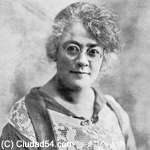
Salomé Ureña

Salomé Ureña
Biography
Salomé Ureña: The Poetic Voice of a Rising Nation
Introduction
Salomé Ureña de Henríquez remains one of the most towering intellectual figures of the nineteenth-century Caribbean. As the national poet of the Dominican Republic and a radical pioneer of women's education, she forged a new path for her country during a period of intense political fragmentation and post-colonial anxiety. Writing at a time when the Dominican Republic was struggling to define its sovereignty, Ureña’s verse provided a moral compass and a vision of democratic progress. Her subsequent dedication to education transformed the social landscape of her country, establishing the first institution of higher learning for women and training a generation of female teachers who would champion the cause of intellectual liberation. Her life represents the intersection of romantic patriotism, positivist reform, and a deep-seated belief in the power of the written word.
Early Life and Foundations in a Turbulent Era (1850–1867)
Born in the historic city of Santo Domingo on October 21, 1850, Salomé Ureña entered a world marked by political instability and national vulnerability. Just six years prior, in 1844, the Dominican Republic had declared its independence from Haiti, led by patriotic visionaries like Juan Pablo Duarte, Francisco del Rosario Sánchez, and Matías Ramón Mella. However, the infant republic was immediately besieged by internal conflicts and authoritarian caudillos. The political landscape was dominated by the rivalries of Pedro Santana and Buenaventura Báez, both of whom sought foreign protectors to secure their rule. This culminated in Santana's controversial decision to annex the country back to Spain in 1861, a move that sparked the bloody War of Restoration (1863–1865) and threw the nation into further turmoil.
Ureña was born to a family deeply embedded in the island’s intellectual and political life. Her father, Nicolás Ureña de Mendoza, was a prominent lawyer, politician, and poet who wrote costumbrista verse reflecting Dominican traditions. Her mother, Gregoria Díaz de Castro, was a well-educated woman who instilled in her daughter a love of reading and a deep moral grounding. Under her father’s tutelage, Ureña received an exceptional, if informal, education. She read the classics of Spanish literature, including Fray Luis de León, Garcilaso de la Vega, and San Juan de la Cruz, alongside contemporary French and English writers in translation. The young Salomé showed an early genius for language, absorbing the formal structures of poetry and the political philosophies of the European Enlightenment. This rich domestic environment served as a sanctuary from the civil wars and political violence raging outside her family home.
The Literary Awakening and "Herminia" (1867–1879)
By the age of fifteen, Ureña was composing her own verses. However, entering the male-dominated literary sphere of nineteenth-century Santo Domingo was a perilous endeavor for a young woman. To protect her identity and test the public reception of her work, she began publishing her poems in local periodicals in 1867 under the pseudonym "Herminia". This persona allowed her to write with a degree of freedom and authority that was otherwise denied to women of her social standing. Her early poems under this name focused on themes of nature, faith, and the domestic sphere, but they quickly began to incorporate broader social concerns.
As her confidence grew and her style matured, the political urgency of her writing became impossible to hide behind a pseudonym. In 1874, at the age of twenty-four, she abandoned the name Herminia and began publishing under her own name. The transition marked her arrival as a mature, independent voice in Dominican letters. Her poetry resonated deeply with a public weary of civil conflict, and she was quickly adopted by the country’s liberal elite as a symbol of cultural renewal. In 1880, the prestigious literary society Sociedad Amigos del País published her first collected volume of poems, Poesías de Salomé Ureña, solidifying her reputation as the "national poetess" of the Dominican Republic.
The Politics of Poetry: Patriotism, Progress, and the Restoration (1870s)
Ureña’s poetry from the 1870s is characterized by an intense, romantic patriotism that was closely aligned with the Liberal "Blue Party" (Partido Azul), led by the military hero Gregorio Luperón. Unlike the conservative "Red Party" (Partido Rojo) of Buenaventura Báez, which favored foreign annexation and dictatorial rule, the Blues championed democratic progress, national sovereignty, and the secular modernization of the state. Ureña’s verse became the artistic vanguard of this liberal movement, urging her compatriots to lay down their arms and build a nation based on reason, industry, and education.
Her masterpiece from this era, "Ruinas" (1876), is a melancholic yet hopeful meditation on the ruins of Santo Domingo’s colonial past. She uses the crumbling stone monuments of the city—once the center of Spanish power in the Americas—as a metaphor for the intellectual and moral decay of her contemporary society. Yet, rather than despair, the poem concludes with an urgent call to action, demanding that the Dominican people rebuild their nation not through military conquest, but through the cultivation of the mind.
Memorias venerandas de otros días, soberbios monumentos, del pasado esplendor reliquias frías, donde el arte vertió sus fantasías, donde el alma expresó sus pensamientos.
— Salomé Ureña, "Ruinas"
In another landmark poem, "A la Patria" (1874), Ureña directly addresses the war-torn nation, urging it to shed its mantle of grief and embrace a future of peace and unity. Her verses are characterized by a sense of civic duty and a belief that the Dominican Republic possessed a unique destiny that could only be realized through democratic stability.
Desgarra, Patria mía, el manto que vilmente, sobre tus hombros puso la bárbara crueldad; levanta ya del polvo la ensangrentada frente, y entona el himno santo de unión y libertad.
— Salomé Ureña, "A la Patria"
Ureña’s patriotic poetry was not merely abstract rhetoric; it was a form of political activism. She used her position to criticize the militarism of local warlords and to advocate for a secular state where intellectual achievement was valued over military force. Her poem "La gloria del progreso" celebrated the arrival of science, technology, and industry, viewing them as tools of liberation that would lift the Dominican Republic out of its colonial legacy.
Love, Family, and Collaborative Ideals (1880–1897)
On February 11, 1880, Ureña married Francisco Henríquez y Carvajal, a brilliant young intellectual, writer, and physician. Their union was a meeting of minds, founded on a shared devotion to the progress of the Dominican Republic. Henríquez y Carvajal, who would later serve as President of the Republic in 1916 during the United States occupation, supported Ureña’s intellectual ambitions and collaborated with her in her educational projects.
Together, they established a household that became a major intellectual center in Santo Domingo. They had four children: Francisco, Pedro, Max, and Camila. The family would become one of the most influential intellectual dynasties in Latin American history. Pedro Henríquez Ureña (1884–1946) became a world-renowned humanist, essayist, philologist, and literary critic whose work defined Latin American cultural identity. Camila Henríquez Ureña (1894–1973) became a pioneering feminist, educator, and essayist who taught at Vassar College and in Cuba. Max Henríquez Ureña (1885–1968) was an accomplished writer, diplomat, and literary historian. Despite her demanding domestic duties, Ureña continued to write and teach, demonstrating that women could balance family life with a significant public and professional career.
Educational Revolution: The Instituto de Señoritas (1881–1893)
While Ureña’s poetry brought her national fame, her most enduring contribution to Dominican society was her work in education. In the late nineteenth century, formal education for Dominican women was virtually non-existent, limited to basic literacy and domestic skills. Ureña recognized that the nation could never achieve true progress or democratic stability while half of its population remained disenfranchised and uneducated.
In 1879, the Puerto Rican educator and philosopher Eugenio María de Hostos arrived in the Dominican Republic. Hostos initiated a radical reform of the country’s educational system, championing a scientific, secular, and positivist approach to pedagogy. Ureña found in Hostos a kindred spirit, and she enthusiastically embraced his ideas. On November 3, 1881, with the support of Hostos and her husband, she founded the Instituto de Señoritas (Young Ladies' Institute) in Santo Domingo.
The Instituto de Señoritas was the first institution of higher education for women in the Dominican Republic. The curriculum was revolutionary, focusing on mathematics, natural sciences, history, geography, literature, and pedagogy, rather than the traditional domestic arts. Ureña sought to prepare women not just to be better wives and mothers, but to be independent thinkers, professionals, and citizens.
The school faced significant opposition from conservative sectors of society and the Catholic Church, which viewed secular female education as a threat to traditional family structures and religious authority. Despite these challenges, Ureña’s dedication kept the school open. The crowning achievement of the Institute came in 1887, when it celebrated the graduation of its first six normal school teachers: Leonor M. Feltz, Altagracia Henríquez Perdomo, Luisa Ozema Pellerano, Mercedes Laura Aguiar, and Ureña’s own sister, Ramona Ureña. This event marked a watershed moment in Dominican history, establishing teaching as a respectable profession for women and creating a network of educated female leaders who would spread modern pedagogy throughout the country.
Declining Health, Exile, and Final Years (1893–1897)
The relentless demands of running the Instituto de Señoritas, raising her children, and participating in public life took a severe toll on Ureña’s health. She had long suffered from respiratory issues, and by the early 1890s, she had contracted tuberculosis. In 1893, facing failing health and financial difficulties, she was forced to close the Institute, a decision that caused her deep sorrow.
In search of a healthier climate, Ureña traveled to Puerto Rico, where her husband was pursuing medical work. She spent several years on the neighboring island, resting and corresponding with her family and friends. Despite her physical weakness, she continued to write and monitor the progress of her former students, who had taken up her educational mantle in Santo Domingo.
Sensing that her death was near, Ureña returned to her beloved Santo Domingo in 1896. She passed away on March 6, 1897, at the young age of forty-six. Her death was met with national mourning. The Dominican government ordered a state funeral, and her body was buried in the Church of the Mercedes, later moved to the National Pantheon of the Dominican Republic, where she rests alongside the founding fathers of the nation.
Legacy and Lasting Impact
Salomé Ureña’s legacy is woven into the very fabric of Dominican national identity. She is celebrated not only as a poet of exquisite lyrical beauty but also as the mother of Dominican feminism and modern education. In recognition of her impact, her birthday, October 21, is celebrated annually in the Dominican Republic as National Poets' Day.
Numerous educational institutions bear her name, most notably the Instituto Superior de Formación Docente Salomé Ureña (ISFODOSU), the country’s premier teacher-training university. Her life and work continue to inspire generations of Caribbean writers and educators. In her poetry, she envisioned a nation of peace, progress, and intellectual light; in her educational work, she built the foundation to make that vision a reality.
Major Contributions
- Salomé Ureña de Henríquez made foundational contributions to the Dominican Republic as its national poet and a pioneer of women's education.
- Her patriotic poetry of the 1870s provided a moral and democratic vision during a period of civil strife and political instability.
- In 1881, she founded the *Instituto de Señoritas*, the country's first center for higher female education.
- Working in partnership with Eugenio María de Hostos, she implemented a secular, scientific curriculum that challenged traditional gender roles, culminating in the graduation of the first group of female professional teachers in 1887.
- Her educational reforms established teaching as a professional avenue for Dominican women and laid the groundwork for modern feminist and civic thought in the nation.