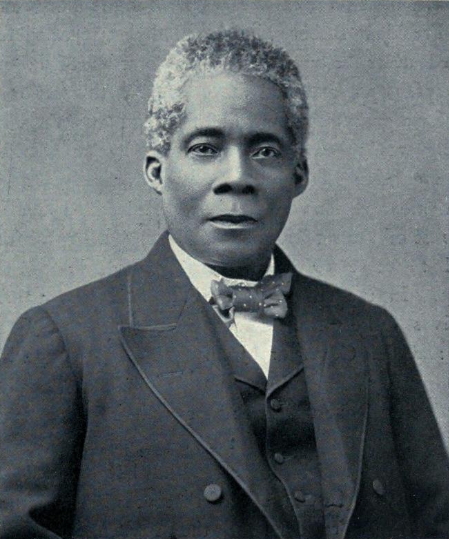
Casper Holstein
Biographical Details
Casper Holstein
Biography
Casper Holstein: The Benefactor of Harlem and the Virgin Islands
Casper Holstein (December 6, 1876 – April 5, 1944) stands as one of the most remarkable, complex, and impactful figures of the early 20th century. Known to history by a myriad of titles—the "Bolito King," the "Gentleman Gambler," and a "Robin Hood" of the African American community—Holstein successfully bridged the gap between the illicit underworld of Harlem's numbers rackets and the prestigious circles of the Harlem Renaissance. Beyond his reputation as a wealthy numbers runner, he was an unparalleled philanthropist, pouring his massive fortune into the arts, civil rights activism, and the social uplift of his native United States Virgin Islands.
Early Life and St. Croix Roots
Casper Holstein was born Egbert Joseph in Christiansted on the island of St. Croix, then part of the Danish West Indies (which would later become the U.S. Virgin Islands). Born into a post-emancipation society that still struggled with intense economic disenfranchisement and racial inequality, Holstein experienced the harsh realities of colonial life early on. Under Danish rule, the economy of St. Croix was largely agricultural, dominated by sugar cane plantations that relied on the strenuous labor of the Black majority. Opportunities for social mobility were drastically limited by a strict racial and class hierarchy.
The economic stagnation of the late 19th century prompted many families to look abroad for survival. Seeking better opportunities, he and his mother joined the wave of Caribbean migration, moving to New York City in 1894 when he was a teenager. Settling in Brooklyn, Holstein attended high school, where he displayed an acute intelligence and an aptitude for numbers.
"He possessed an intellect that was too expansive for the narrow avenues of opportunity afforded to Black men of his era. So, he built his own avenues."
Following high school, Holstein enlisted in the United States Navy, serving with distinction during the Spanish-American War. His military service offered him a broader view of the world and instilled a strict sense of discipline—traits that would later serve him exceptionally well in managing his unconventional business empire.
From Wall Street Messenger to the "Bolito King"
After his honorable discharge from the Navy, Holstein worked a series of menial jobs common for Black men at the time, including stints as a bellhop and a janitor. However, his big break came when he secured a position as a messenger and porter for a Wall Street commodities brokerage firm. It was here, amidst the frantic trading floors and ticker tapes, that Holstein studied the stock market's daily fluctuations and the psychology of finance.
During the 1920s, Harlem was teeming with illegal lotteries known as the "numbers game." The game was incredibly popular among the working-class Black community, who could bet mere pennies—sometimes as little as a single cent—for a chance to win a substantial payout of up to six hundred times their wager. However, the system was highly corruptible; racketeers routinely manipulated the winning numbers to ensure they didn't have to pay out large sums to the players.
Holstein, applying the financial acumen he gained on Wall Street, revolutionized the game. He created a system where the daily winning numbers were derived from the New York Stock Exchange clearinghouse totals—specifically, the advance and decline figures published daily in the major evening newspapers. This ingenious innovation made it mathematically impossible for operators to fix the numbers, instilling deep trust among the betting public. He effectively standardized and professionalized the numbers racket, earning the moniker the "Bolito King."
At the height of his operation, Holstein was reportedly making over $12,000 a day (an astronomical sum at the time), amassing a fortune that made him one of the wealthiest Black men in America.
Philanthropy and the Harlem Renaissance
Unlike many of his mobster contemporaries who spent their wealth on flashy, self-indulgent lifestyles, Holstein viewed his fortune as a resource for community uplift. He became an anonymous but massive patron of the arts, effectively bankrolling a significant portion of the Harlem Renaissance.
Holstein famously funded the annual literary prizes awarded by Opportunity magazine, a publication of the National Urban League edited by Charles S. Johnson. These cash prizes—often amounting to hundreds of dollars, a fortune for struggling artists—provided crucial financial support and recognition to emerging Black writers who would go on to define the era. Icons such as Langston Hughes, Zora Neale Hurston, Wallace Thurman, and Countee Cullen all benefited directly from Holstein's clandestine generosity. Without his capital, the structural foundations of the Harlem Renaissance's literary explosion would have been significantly weaker.
His philanthropy extended far beyond the arts:
- Education: He funded dormitories at historically Black colleges and universities (HBCUs) and helped establish a Baptist school in Liberia.
- Civil Rights: He was a major financial backer of Marcus Garvey's Universal Negro Improvement Association (UNIA), believing strongly in the movement's message of Black economic empowerment and self-reliance.
- Community Welfare: In Harlem, he quietly paid rent for families facing eviction, bought coal for the poor during brutal New York winters, and funded local boys' clubs to keep youth off the streets.
"He could not bear to see a child go hungry or a brilliant mind go to waste. His numbers game may have been illegal, but the salvation it bought for Harlem was purely righteous."
A Champion for the Virgin Islands
Despite his immense success and influence in New York, Holstein never forgot his roots in the Caribbean. He remained fiercely dedicated to the Virgin Islands, utilizing his wealth and political connections to advocate for the people of St. Croix, St. Thomas, and St. John.
When the islands were purchased by the United States from Denmark in 1917 for military strategic purposes during World War I, the residents were not granted full U.S. citizenship. Instead, they were left in a state of political limbo under the strict, often authoritarian administration of the U.S. Navy. Holstein passionately lobbied Congress for the civil rights and full American citizenship of Virgin Islanders. He wrote impassioned editorials and funded publications that highlighted the plight of Virgin Islanders to the broader American public. He worked closely with fellow Virgin Islands labor leader David Hamilton Jackson to push for social reform, economic development, and an end to the naval rule of the islands, culminating in the passage of the Organic Act of 1936, which finally granted a measure of self-government to the territory.
Furthermore, Holstein was the primary source of disaster relief for the islands. When devastating hurricanes struck the Caribbean in the 1920s, destroying homes and crops, it was Casper Holstein—not the federal government—who chartered ships filled with food, lumber, and medical supplies, saving countless lives and helping his homeland rebuild. He also established a trust fund to buy land in the Virgin Islands and redistribute it to local farmers, attempting to break the monopoly held by the large sugar estates and empower the working class.
Kidnapping, Decline, and Legacy
Holstein's immense wealth and non-violent demeanor eventually made him a target. In 1928, he was kidnapped by five white men who demanded a $30,000 ransom. Holstein famously negotiated his own release, reportedly telling his captors they were asking for far too little. Though he survived the ordeal unharmed, the kidnapping signaled a dark turning point.
Soon after, violent white mobsters, most notably Dutch Schultz, recognized the immense profitability of the Harlem numbers game and moved in to forcefully take over the operations. Holstein, refusing to engage in the bloody gang wars that would endanger his community, gracefully stepped away from the racket he had built.
In the 1930s, the federal government indicted him for illegal gambling, and he served a year in prison. Upon his release, much of his vast fortune was gone, depleted by legal fees, the Great Depression, and his relentless charitable giving. Yet, his dignity and standing in the community remained intact.
Casper Holstein died in Harlem on April 5, 1944. Despite his reduced financial state in his final years, his funeral at the Memorial Baptist Church was attended by more than 2,000 mourners. They came to pay their respects not to a mobster, but to a benefactor, a visionary, and a pioneer of Black philanthropy.
Today, Holstein is remembered as a cornerstone of Caribbean-American history. His story challenges the conventional narratives of the 1920s underworld, presenting a man who navigated a deeply prejudiced society by creating his own economy, and then used that economy to fundamentally uplift his people across both Harlem and the Virgin Islands.
Major Contributions
- Casper Holstein revolutionized the informal economy of 1920s Harlem by standardizing the "numbers game," using the proceeds to become one of the most prolific philanthropists of the early 20th century.
- He was a foundational financial backer of the Harlem Renaissance, single-handedly funding literary prizes that launched the careers of iconic African American writers while supporting civil rights organizations like the UNIA.
- In his native U.
- S.
- Virgin Islands, Holstein's contributions were equally monumental.
- He funded massive disaster relief efforts following devastating hurricanes, financed land redistribution programs for local farmers, and tirelessly lobbied the U.
- S.
- Congress alongside leaders like [David Hamilton Jackson](/profiles/david-hamilton-jackson) to end naval rule and secure full U.
- S.
- citizenship and civil rights for Virgin Islanders.
- His legacy remains a powerful testament to diasporic dedication and community empowerment.